
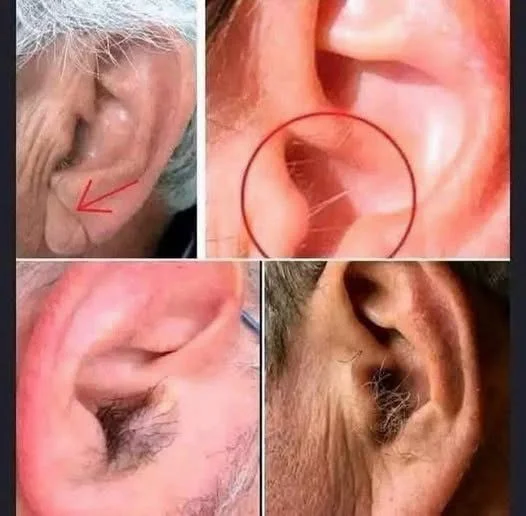
Why Hair Grows on Your Ears as You Age: The Science Behind This Common Change 👂
Why Hair Grows on Your Ears as You Age: The Science Behind This Common Change 👂
Noticing hair growing on the ears as you get older is a very common experience. It usually becomes more noticeable after the age of 40, 50, or beyond, and for many people it can feel surprising at first. However, in most cases, this change is completely normal and is simply part of the natural aging process.
🧬 The Main Cause: Hormonal Changes
A major factor behind ear hair growth is the shift in hormone activity over time, especially androgens. Two key hormones involved are Testosterone and Dihydrotestosterone (DHT).
These hormones influence hair follicles differently depending on their location in the body:
- On the scalp → may contribute to thinning hair
- On ears, nose, and eyebrows → may stimulate thicker or more visible hair
This is why many people notice scalp hair loss at the same time as increased ear or facial hair growth.
🧬 Genetics Also Play a Strong Role
Family history is another important factor. If your parents or grandparents developed visible ear hair with age, you are more likely to experience it as well. Genetics influence:
- Hair thickness
- Growth rate
- Hair density
- Where hair becomes more noticeable
Some individuals develop only fine, light hairs, while others experience more prominent growth.
👂 Ear Hair Has a Natural Function
Although often seen as cosmetic, ear hair actually serves a protective purpose. It helps:
- Trap dust and airborne particles
- Reduce the entry of insects into the ear canal
- Act as a natural barrier for the ear
With age, these hairs may grow longer or thicker, but their function remains the same.
🧠 Common Misconceptions
There are many myths about ear hair growth:
- It is NOT caused by poor circulation
- It is NOT a disease
- It is NOT a sign of serious hormonal imbalance in most cases
- Trimming does NOT make hair grow back thicker
These are all common misunderstandings without scientific support.
✂️ Should You Remove It?
Ear hair removal is optional and mainly based on personal preference. If grooming is desired, safer methods include:
- Electric ear trimmers
- Rounded-tip scissors for visible hairs
It is important to avoid inserting sharp objects or tweezers deep into the ear canal to prevent injury.
🌿 Final Thoughts
Ear hair growth is a natural part of aging influenced by hormones, genetics, and normal biological changes. It is not a medical problem or warning sign in most cases.
Like gray hair or wrinkles, it is simply one of many ways the human body changes over time.