
Take this daily smoothie, improve eyesight, eliminate anemia and more
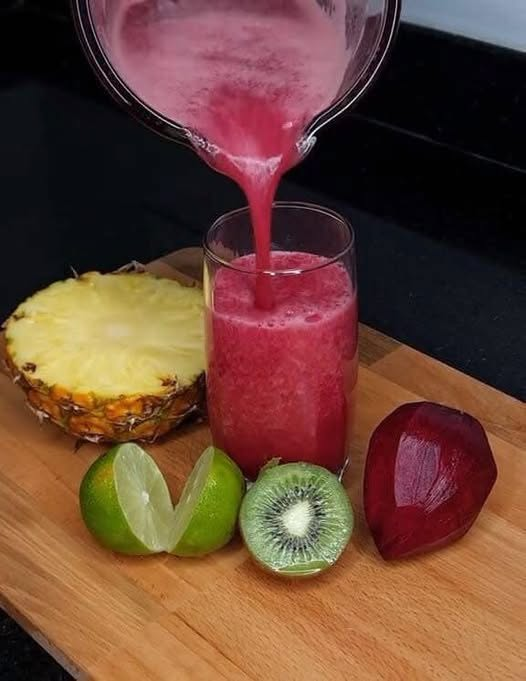
The colorful drink in this picture combines beetroot, pineapple, kiwi, and lime. It looks like a refreshing fruit-and-vegetable juice, and each ingredient provides different nutrients and plant compounds.
You may see drinks like this promoted online for blurred vision, anemia, fatty liver, or “blood cleansing.” Those claims need some context. A homemade juice can contribute nutrients to your diet, but it is not a treatment for blurred vision, anemia, or fatty liver disease.
What’s Actually in This Drink?
Beetroot contains folate, potassium and naturally occurring nitrates, along with betalain pigments. Beetroot juice has been studied for several potential effects, particularly related to blood-vessel function and exercise performance.
Pineapple provides vitamin C and carbohydrates, while kiwi is also a good source of vitamin C and provides fiber when the whole fruit is consumed. Lime adds additional vitamin C and acidity.
These nutrients can make the drink a refreshing addition to a balanced diet.
Can It Help With Anemia?
Beetroot does contain some iron and folate, but drinking beet juice does not automatically treat anemia.
Iron-deficiency anemia can have many causes, including inadequate iron intake, blood loss, or problems absorbing iron. Treatment depends on the underlying cause and may require iron supplementation under medical guidance.
Vitamin C from fruits such as kiwi and lime can help the body absorb iron from plant foods. However, the amount of iron in a typical beetroot drink is not enough to make it a replacement for appropriate anemia treatment.
What About Blurred Vision?
Blurred vision should not be treated as a simple vitamin deficiency without evaluation.
It can have many causes, including changes in blood sugar, refractive problems, eye conditions, medications, and other medical issues. A juice may provide useful nutrients, but it cannot diagnose or correct the underlying cause.
Sudden or severe blurred vision, especially when accompanied by eye pain, weakness, difficulty speaking, or other sudden neurological symptoms, requires prompt medical attention.
Can It Clean a Fatty Liver?
This is another claim that deserves caution.
There is some research investigating beetroot juice in people with fatty liver disease. One randomized trial reported improvements in liver-related measurements among participants consuming beetroot juice, particularly when combined with a Mediterranean-style diet. However, that does not establish this particular fruit-and-beet drink as a cure for fatty liver.
For fatty liver disease, established management focuses on factors such as healthy eating, physical activity, and gradual weight loss when appropriate.
A Simple Way to Make It
For an occasional homemade drink, you could blend:
- ½ small beetroot
- 1–2 slices of fresh pineapple
- 1 kiwi
- Juice from ½ lime
- ½–1 cup water
Blend until smooth. If you prefer a thinner drink, strain it, although keeping the pulp provides more fiber.
Because pineapple, kiwi, and beetroot can make a naturally sweet drink, there is usually no need to add sugar.
The Bottom Line
This beetroot, pineapple, kiwi, and lime drink can be a colorful way to add fruits and vegetables to your diet. It provides vitamin C and other nutrients and contains interesting plant compounds from beetroot.
But it should not be promoted as a cure for blurred vision, anemia, or fatty liver. If you have one of these conditions, the important step is identifying the cause and following appropriate medical treatment.
Think of this drink as nutrition—not medicine.