
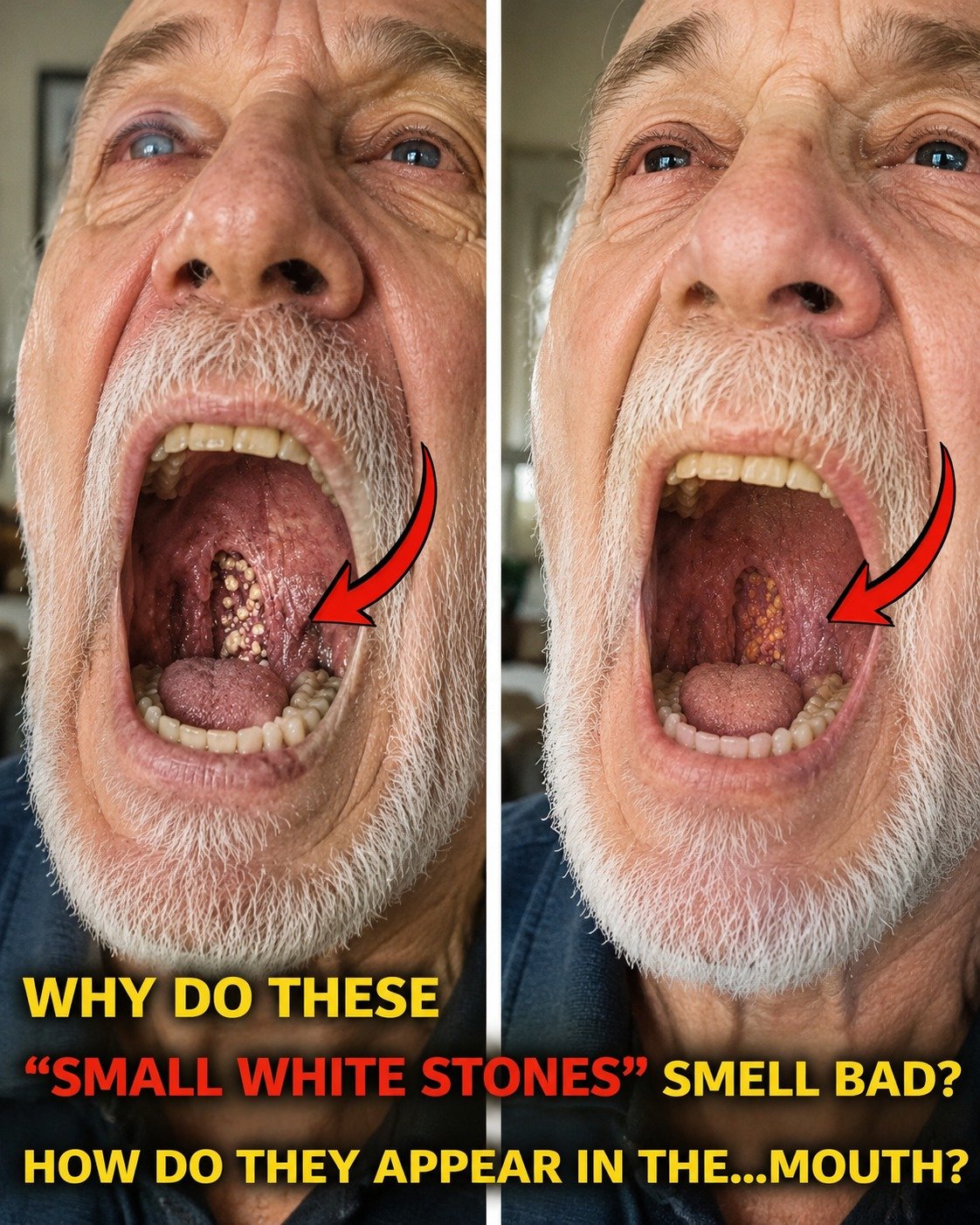
Small White Tonsil Stones Trigger Bad Breath — Here’s Why
Small white tonsil stones don’t just sit in the back of your throat and look disgusting. They trap bacteria, dead cells, mucus, and food debris, then harden into stink-bombs that keep feeding foul breath no matter how hard you brush.
That’s why the mirror can look clean while your mouth still feels like a damp, sour cave. One minute you’re talking normally, the next you catch that rotten, stale odor and start swallowing, scraping, rinsing, and hoping nobody noticed.
The real insult is this: the smell isn’t coming from the surface of your teeth. It’s brewing deep in the tonsillar crypts, where ordinary brushing barely reaches and mints get crushed in seconds.
The body isn’t failing you here. It’s getting jammed by a pocketed, debris-trapping design that turns ordinary mouth residue into a hard, reeking plug.
Why the smell hits so hard
Think of your tonsils like a rough sponge with tiny holes. Every time you swallow, those pockets snag scraps, shed tissue, and mucus, then lock them in place like lint trapped in a dryer filter.
Inside that trapped pile, bacteria go to work. They break the material down and release sulfur-heavy gases — the same kind of stink that makes rotten eggs punch you in the face.
That’s why this odor feels so stubborn. You can brush your teeth until your gums ache, but if the source is still buried in the back of the throat, the smell keeps leaking out with every word and breath.
One of the ugliest parts is how invisible the problem can be. You may not see a single stone in the morning, then later spot a cluster of white or yellow lumps lodged in the tonsil folds like tiny pebbles packed into wet clay.
The $100-billion wellness machine barely whispers about this because there’s no shiny bottle solution hiding in it. The answer is usually less glamorous and far more annoying: stop feeding the pocket, flush the pocket, and keep the debris from hardening there in the first place.
What’s actually happening in your throat
Here’s the mechanism: food particles, dead cells, bacteria, and mucus collect in the tonsils’ folds. Then saliva minerals, especially calcium, help cement the mess into a stone-like lump.
That process is less like “bad breath” and more like a clogged drain turning into a crusted plug. Water still runs past it, but the gunk stays behind, building layer after layer until the smell becomes impossible to ignore.
The first thing people notice is that weird sensation of something stuck back there. They keep clearing their throat, coughing lightly, or swallowing hard as if they can force the irritation away.
Then comes the social damage. You lean in to speak and suddenly back off, or you catch somebody taking a tiny step away during conversation, and you know the air around your mouth just betrayed you.
That’s not random bad breath. That’s a hidden pocket in the throat turning into a fermentation chamber.
Why some mouths keep making them
Deeper tonsil crevices act like potholes after a storm. Once debris starts collecting there, each new meal adds another layer, and each layer gives bacteria more to chew through.
Dry mouth makes it worse. Saliva is the rinse cycle, the body’s built-in hose, and when it thins out, the throat stops clearing itself with the force it needs.
So the mouth feels sticky, the throat feels scratchy, and the stones get a chance to harden in peace. That’s how a small pocket turns into a recurring problem that keeps coming back like a bad tenant.
After a while, the pattern gets obvious: the odor returns after meals, the throat feels irritated, and the back of the mouth starts feeling like it’s holding onto something it refuses to let go of.
And that’s why nobody told you. Not because it’s mysterious — because it’s boring, cheap, and easy to overlook while everyone chases expensive fixes that never reach the back of the throat.
Why the right habits change the game
Brushing and flossing still matter, but they’re only the front gate. The real cleanup happens when you attack the throat pockets directly with hydration, tongue cleaning, and rinsing that loosens what’s stuck before it hardens.
Warm saltwater works like a pressure wash for irritated tissue. It helps loosen debris and leaves the throat less hostile to the grime that loves to cling there.
A low-pressure water flosser can also help blast loose material from the tonsil pockets without ripping at the tissue. Think of it like rinsing mud out of the grooves in a tire instead of just polishing the hood of the car.
When saliva stays flowing, the mouth becomes a moving river instead of a stagnant pond. That shift matters because stagnant pockets are where odor compounds multiply fastest.
The after picture is simple and powerful: less throat scratch, fewer white bits showing up, and a breath that doesn’t seem to rot in the back of your mouth by midday.
Why the change feels so relieving
For men who deal with this, the frustration often shows up in close conversations, work meetings, and the quiet panic of wondering whether their breath is repelling people before they even realize why.
For women, the hit is often different but just as brutal: that constant self-check before speaking, laughing, or leaning in, as if every social moment needs a breath audit first.
In both cases, the relief is the same. Once the throat stops collecting and calcifying debris, the mouth feels cleaner, lighter, and less like it’s carrying a hidden embarrassment around all day.
It’s like pulling wet leaves out of a gutter before they rot into sludge. Clear the blockage, and everything downstream starts moving again.
The goal isn’t to mask the smell. The goal is to stop the throat from manufacturing it in the first place.
The one thing that wrecks the whole process
Rinsing once and calling it done is the fastest way to keep the cycle alive. If the tonsil pockets stay dry, sticky, and packed with debris, the stones come right back and the odor follows them like a shadow.
That’s why timing matters: clean after meals, keep saliva moving, and don’t let the back of the mouth sit untouched while bacteria build another stink layer.
One overlooked habit can neutralize everything else — using harsh, drying mouthwash that leaves the throat even drier and gives the debris a better place to cling.
The next piece is the one people miss most: the single rinse pairing that helps break the cycle at the source.
This article is for informational purposes only and does not replace professional medical advice. Please consult your healthcare provider for personalized guidance.