
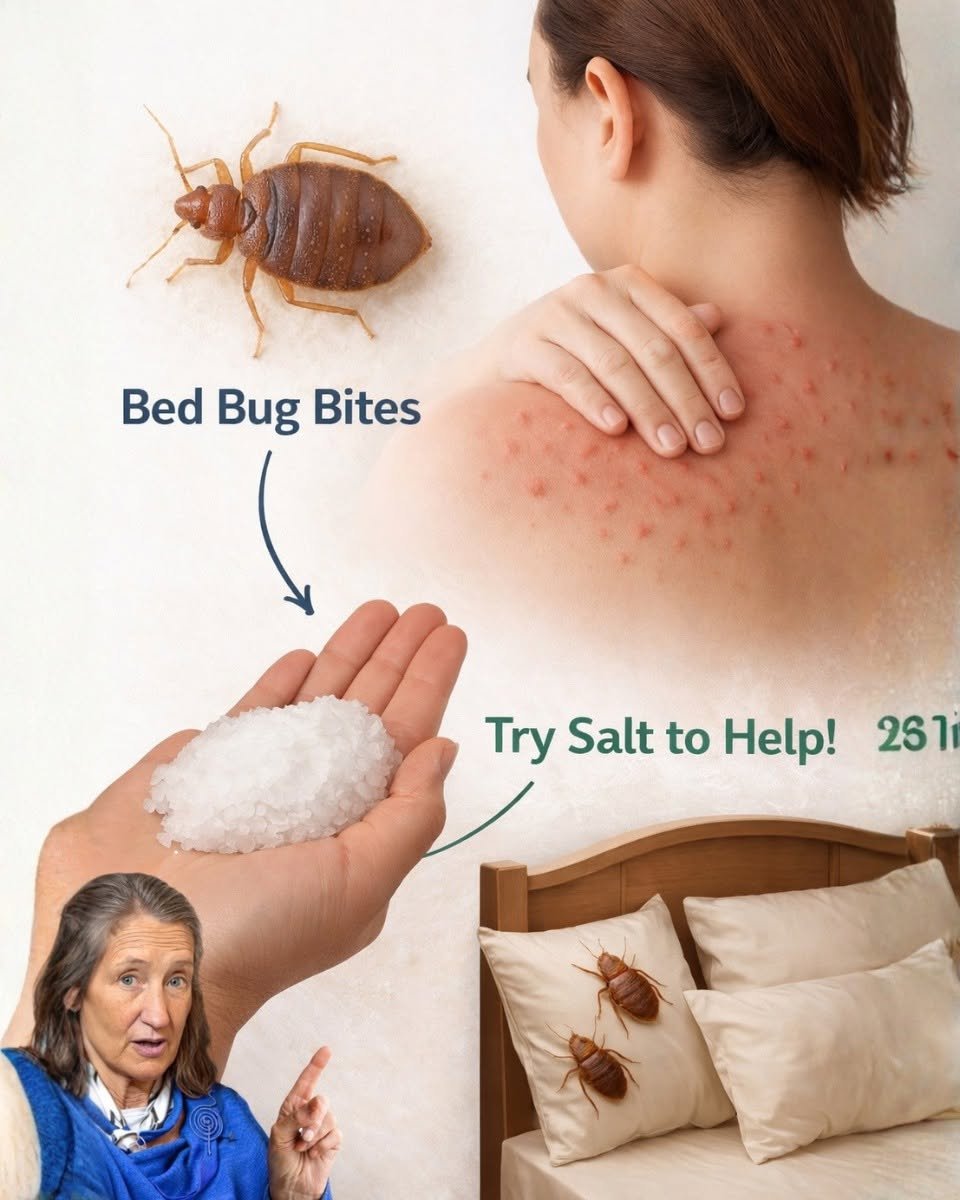
How to Banish Bedbugs from Your Garden in Minutes with Salt: Myth or Reality?
Have you ever noticed tiny reddish-brown insects crawling around your garden and immediately worried they might be bedbugs? It’s a common concern, and many people online suggest a quick solution: sprinkling salt to eliminate them instantly.
But does this popular trick really work—or is it simply another internet myth?
Let’s explore the truth behind the salt method and discover safer, more effective ways to protect your garden naturally.
🌱 Do Bedbugs Actually Live in Gardens?
Before trying any remedy, it’s important to understand the pest you’re dealing with.
Bedbugs (Cimex lectularius) are indoor insects that thrive in environments where humans sleep or rest. They commonly hide in:
Mattresses and bed frames
Upholstered furniture
Wall cracks and small crevices
Luggage or clothing
Because they feed exclusively on human or animal blood, they prefer warm indoor spaces close to their hosts.
So if you notice “bedbug-looking” insects outside in your garden, there’s a good chance they are other harmless bugs, such as:
Firebugs
Beetles
Certain plant bugs
Correct identification is essential before taking any action.
🧪 Why Salt Doesn’t Work Against Bedbugs
Salt is often mentioned as a natural pest remedy because it can dehydrate soft-bodied creatures like slugs or snails. However, bedbugs are very different.
Here’s why salt usually isn’t effective:
1️⃣ Bedbugs Have Protective Bodies
Bedbugs have a tough, wax-coated outer shell that protects them from dehydration. Salt crystals typically can’t penetrate this protective layer.
2️⃣ They Don’t Eat Salt
Many garden pests consume plants or organic matter, which means they might ingest salt.
Bedbugs, however, feed only on blood, so they won’t be attracted to or affected by salt as food.
3️⃣ Salt Won’t Reach Hidden Eggs
Bedbug eggs are often hidden deep in cracks or protected spaces. Sprinkling salt on surfaces rarely reaches these areas.
4️⃣ Salt Can Damage Your Soil
Using large amounts of salt in your garden may:
Alter soil pH
Dry out plant roots
Reduce soil fertility
So while it may seem harmless, salt can hurt your plants more than it helps control pests.
🌿 Natural Alternatives That Actually Help
If you suspect pest activity around your garden furniture or outdoor areas, several safer and more reliable solutions may help.
🌾 Diatomaceous Earth (DE)
This natural powder, made from fossilized algae, works by damaging insects’ outer shells, leading to dehydration.
How to use it:
Lightly sprinkle around cracks, furniture legs, or outdoor cushions
Use food-grade DE for safety
☀️ Heat Exposure
Bedbugs struggle to survive in temperatures above 120°F (49°C).
Try this method:
Place infested items in sealed black bags
Leave them in direct sunlight for several hours
🍃 Vinegar Spray
A mixture of vinegar and water can work as a contact spray for visible insects.
Simple mix:
1 part vinegar
1 part water
Spray directly on surfaces where bugs appear.
🌸 Herbal Deterrents
Some plants and herbs may help discourage pests from settling nearby.
Popular natural options include:
Lavender
Mint
Thyme
Small sachets or planted herbs can act as gentle deterrents.
🧹 Regular Cleaning
Sometimes the most effective method is the simplest.
Vacuum outdoor cushions
Clean cracks in wood or furniture
Remove clutter where insects can hide
This helps reduce hiding places and prevent pests from multiplying.
⚠️ Safety Tips Before Trying Any Remedy
To keep your garden healthy and safe:
✔ Identify the insect first — many outdoor bugs are harmless.
✔ Avoid excessive salt in soil — it can damage plants.
✔ Keep powders and sprays away from pets and children.
✔ Seek professional pest control if an infestation becomes severe.
🌸 Final Thoughts
Salt may be a powerful ingredient in the kitchen, but when it comes to bedbugs in the garden, it’s not the miracle solution many people believe.
Instead, consider science-supported methods like diatomaceous earth, heat exposure, proper cleaning, and natural plant deterrents. These approaches are safer for your plants, kinder to the soil, and far more effective.
✨ With the right knowledge and gentle strategies, you can keep your garden healthy, balanced, and pest-free—naturally.