
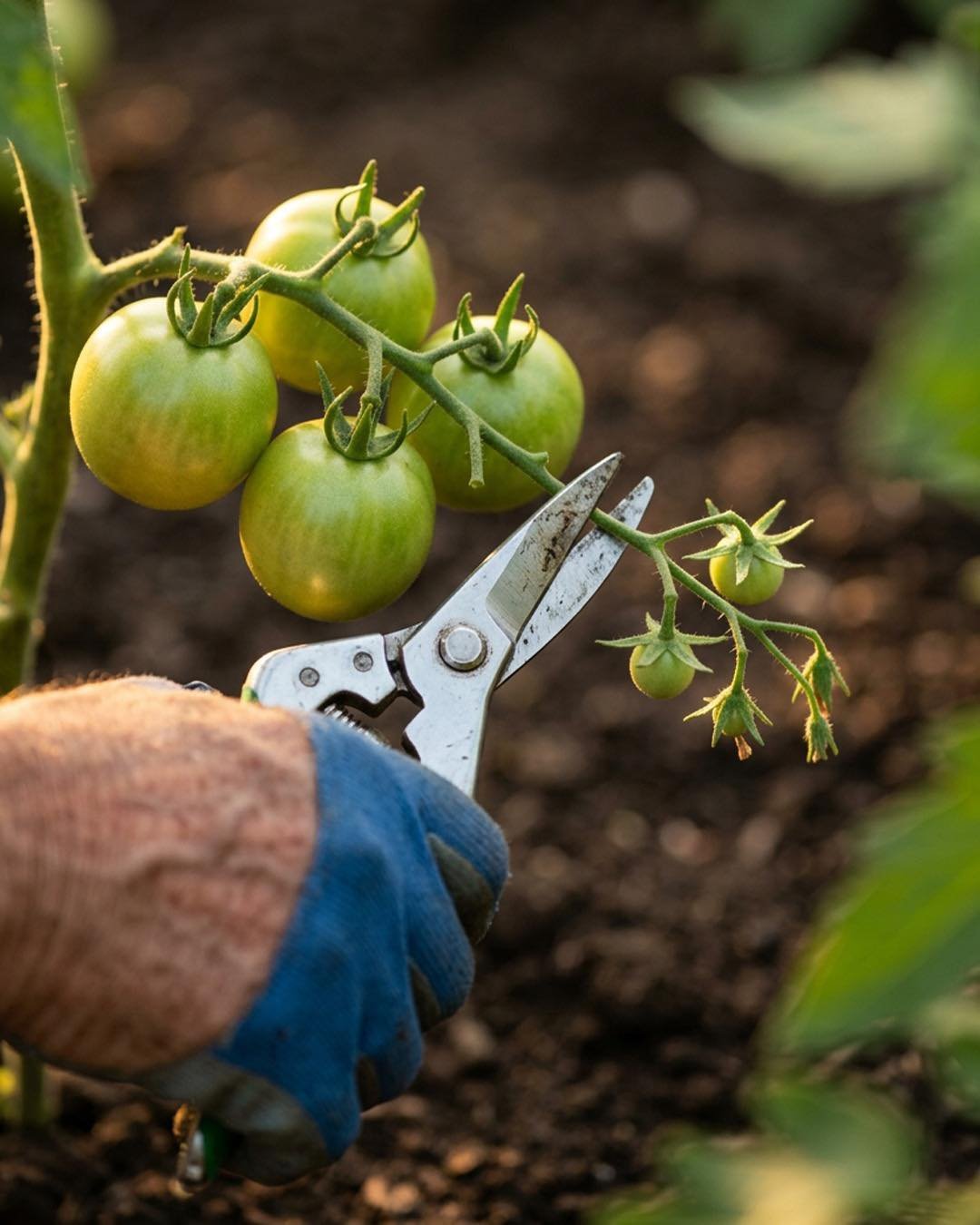
Growing Better Tomatoes: The Simple Guide to Cluster Thinning
Every gardener looks forward to seeing the first green tomatoes appear on the vine. When a plant produces a long branch, or “cluster,” loaded with ten or more baby tomatoes, it feels like a massive success. However, letting every single one of those tomatoes grow might actually hurt your final harvest.
Professional growers and experienced home gardeners use a simple trick to get the best results: they cut off the tiny tomatoes at the very end of the cluster. This method is known as fruit thinning or cluster pruning. While it might feel wrong to cut off healthy green tomatoes, doing so completely changes the way the plant uses its energy.
Here is a complete guide on how this technique works, why it is so powerful, and how you can easily use it in your home garden.
Why The Plant Needs Help
A tomato plant acts like a factory. The leaves take in sunlight and turn it into sugar and energy. The roots pull up water and nutrients from the soil. The plant then sends these resources to the growing fruit.
However, the plant only has a limited supply of food and water to give. When a cluster has too many tomatoes on it, the plant has to share that limited food among all of them. The tomatoes at the base of the cluster (the ones closest to the main stem) grab the nutrients first. The tomatoes at the very tip get whatever is left over. Because of this, the ones at the end usually stay small, take a long time to ripen, and drain energy that the plant could have used elsewhere.
The Power of Trimming the Tip
By cutting off the last three or four tiny tomatoes on a long cluster, you take control of the plant’s energy. Here is what happens when you use this technique:
- Much Bigger Fruit: Since the plant is no longer feeding the runts at the end of the vine, it redirects all that water and sugar to the remaining tomatoes. The ones left behind will grow much larger, heavier, and meatier.
- Faster and Even Ripening: Small tomatoes at the tip often take a very long time to turn red. By removing them, the main tomatoes ripen faster and at the same time. This is very helpful if you live in an area with a short summer season and want to harvest before it gets cold.
- Protection Against Broken Branches: Tomatoes are heavy because they are full of water. A cluster with too many fruits can easily become so heavy that the stem snaps right off the plant. Thinning the cluster lightens the load and saves the branch from breaking.
- Better Disease Prevention: Tomatoes crowded tightly together block airflow. When air cannot move between the fruits, moisture builds up, creating the perfect environment for fungus and rot. Removing a few fruits gives the remaining ones room to breathe and stay dry.
How to Thin Your Tomatoes at Home
This technique requires no special chemicals or expensive equipment. All you need is a clean pair of pruning shears or basic garden scissors.
Follow these simple steps to thin your clusters:
- Wait for the Right Time: Do not cut the flowers. Wait until the tomatoes on the cluster have formed and the ones closest to the stem are about the size of a marble or a small golf ball.
- Inspect the Cluster: Look at the whole branch of fruit. You will notice that the tomatoes closest to the main stem are the largest, and they get progressively smaller as you move toward the tip.
- Identify the Target: Look at the last three or four tomatoes at the very end of the cluster. These are usually the smallest ones and are the targets you want to remove.
- Make the Cut: Take your clean scissors and snip the main stem of the cluster just above those last few small tomatoes. Make a clean cut so the plant can heal quickly.
- Clean Up: Throw the cut pieces into your compost bin or trash. Do not leave them on the ground under the plant, as decaying plant matter can attract bugs and disease.
Important Rules for Beginners
If you are trying this for the first time, keep these simple rules in mind to keep your plants safe:
- Always Clean Your Tools: Before making any cuts, wipe your scissors with rubbing alcohol. Dirty blades can easily spread diseases from one plant to another.
- Do Not Cut Too Much: You still want a good harvest! A good rule of thumb is to leave four to six healthy tomatoes on the cluster and only cut the remaining small ones at the end.
- Only Do This on Big Types of Tomatoes: This trick is meant for large or medium slicing tomatoes (like beefsteaks or heirlooms). You do not need to do this for cherry or grape tomatoes. Cherry tomato plants are designed to grow huge clusters of tiny fruits, so just let them grow naturally.
- Do It Early: The sooner you cut the tiny tip tomatoes, the more energy you save for the big ones. If you wait until all the tomatoes are almost full size, the plant has already wasted its energy, and the trick will not work as well.
Learning to cut away good fruit takes a bit of courage for a beginner. But once you see how large and healthy your remaining tomatoes grow, fruit thinning will quickly become a permanent part of your gardening routine.