
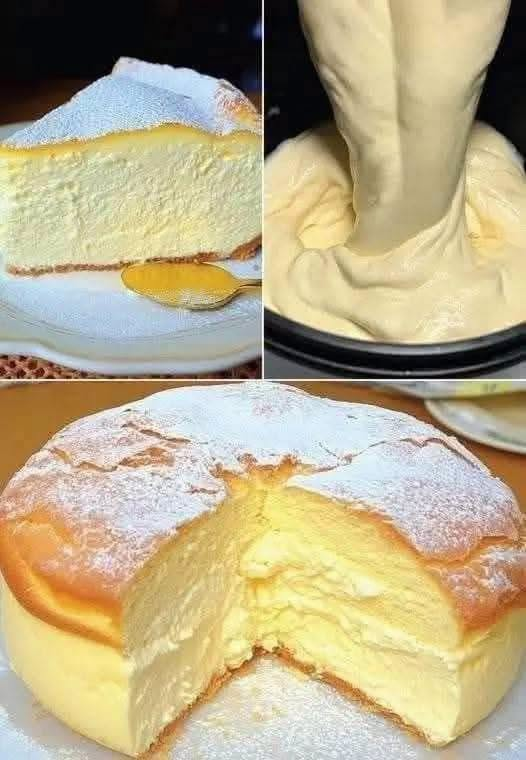
Fluffy Japanese Cotton Cheesecake
Prep Time: 30 minutes
Cook Time: 70–80 minutes
Cooling Time: About 1 hour
Servings: 10
Ingredients
9 oz (250 g) cream cheese, softened
¼ cup (60 g) unsalted butter
⅓ cup plus 1 tablespoon (100 ml) milk
6 large eggs, separated
½ cup (60 g) all-purpose flour
2½ tablespoons (20 g) cornstarch
½ cup plus 1 tablespoon (120 g) granulated sugar
1 tablespoon lemon juice
1 teaspoon vanilla extract
¼ teaspoon salt
Powdered sugar, for serving
Instructions
Step 1: Prepare the oven and pan. Preheat the oven to 320°F (160°C). Line the bottom of an 8-inch round cake pan with parchment paper. Line the sides with a tall strip of parchment that extends slightly above the rim; this gives the cake room to rise. A solid-bottom pan is easiest for water-bath baking. If using a pan with a removable bottom, wrap the outside securely in several layers of foil to reduce the chance of water leaking in.
Step 2: Set up the water bath. Choose a roasting pan large enough to hold the cake pan without their sides touching. Set the roasting pan aside for now. You will add hot water after the batter is in the cake pan, immediately before baking.
Step 3: Melt the cream cheese mixture. Put the softened cream cheese, butter, and milk in a heatproof bowl. Place it over a saucepan of barely simmering water, making sure the bottom of the bowl does not touch the water. Stir gently until the butter melts and the mixture looks smooth. Remove the bowl from the heat and let it cool until warm rather than hot.
Step 4: Add the egg yolks and flavorings. Separate the eggs carefully, placing the whites in a large, clean bowl. Whisk the yolks into the warm cream cheese mixture one at a time. Add the lemon juice and vanilla extract and stir until combined.
Step 5: Add the dry ingredients. Sift the flour and cornstarch over the cream cheese mixture. Whisk gently until there are no visible lumps. Avoid beating vigorously; you want a smooth batter, while the whipped whites added later will provide the airiness.
Step 6: Whip the egg whites. Add the salt to the bowl of egg whites. Beat with an electric mixer until they look foamy. Add the granulated sugar gradually while continuing to beat. Stop when the whites form soft to medium peaks: when you lift the beaters, the tip should bend over slightly. Whites beaten until stiff and dry are more difficult to fold into the batter.
Step 7: Fold the batters together. Add about one-third of the whipped whites to the cream cheese batter. Fold gently with a spatula to lighten it. Add the remaining whites in two portions. Sweep the spatula down through the center and up from the bottom, turning the bowl as you work. Continue only until the mixture looks even, with no large white streaks.
Step 8: Fill the pan. Pour the batter into the prepared cake pan. Run a spatula gently through it once to release any large trapped air pockets, then tap the pan lightly on the counter once or twice. Do not repeatedly bang the pan, which can remove too much of the air you just folded in.
Step 9: Bake in the water bath. Place the cake pan inside the roasting pan. Carefully pour hot water into the roasting pan until it reaches about 1 inch up the outside of the cake pan. Transfer it to the oven and bake for 70–80 minutes. The top should be lightly golden. When you gently move the pan, the center should wobble slightly as one piece rather than ripple like liquid.
Step 10: Cool gradually. Turn off the oven and leave the cheesecake inside for 20 minutes with the oven door slightly open. Then remove the cake pan from the water bath and let it cool further on a rack. Once it is cool enough to handle, carefully loosen the parchment and remove the cake from the pan.
Step 11: Finish and serve. Let the cheesecake cool completely before slicing. Dust the top with powdered sugar just before serving. Use a clean knife for each cut so the soft slices keep their shape.
Tips
Use a clean bowl for the whites. Even a little grease or egg yolk can make egg whites harder to whip. Separate the eggs one at a time into a small bowl before adding each white to the large mixing bowl. That way, one broken yolk will not affect the entire batch.
Let the cheese mixture cool before adding eggs. It should still be fluid and easy to mix, but it must not be so hot that it cooks the yolks. A warm mixture also folds more readily into the whipped whites than a cold, firm one.