
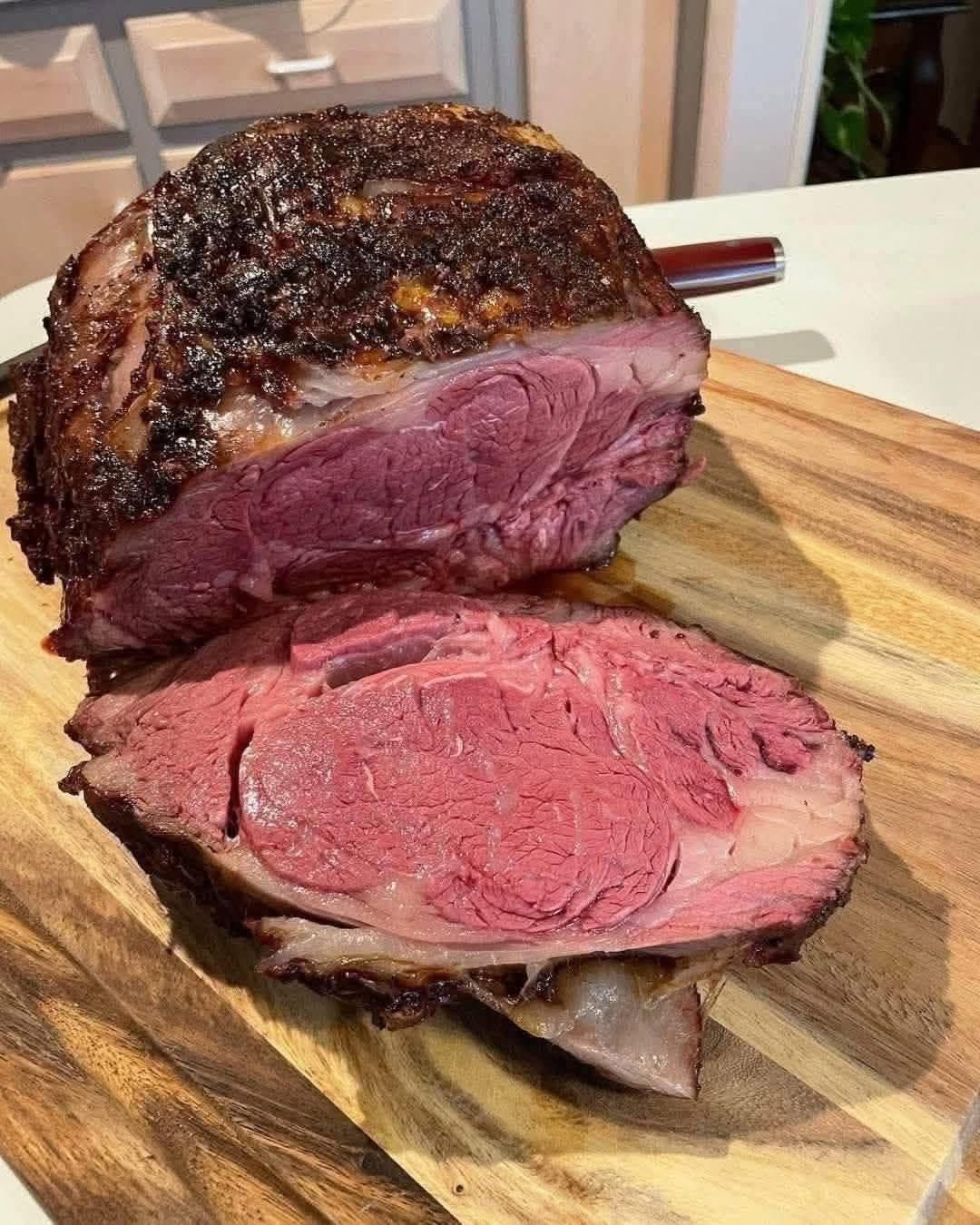
Prime Rib Roast
Prime Rib Roast Recipe: The Ultimate Tender and Juicy Holiday Centerpiece
Introduction
A beautifully cooked Prime Rib Roast is the ultimate centerpiece for holiday feasts, family celebrations, and special occasions. Famous for its exceptional marbling, rich beef flavor, and melt-in-your-mouth tenderness, prime rib is one of the most luxurious cuts of beef you can prepare at home. While it may look like a dish reserved for upscale steakhouses, making a perfect prime rib roast is surprisingly simple with the right technique.
The secret lies in using quality beef, seasoning it generously, roasting it at the correct temperatures, and allowing it to rest before carving. The result is a beautifully browned crust surrounding juicy, tender slices packed with incredible flavor.
Whether you’re preparing Christmas dinner, Easter lunch, Thanksgiving, or an elegant Sunday roast, this classic prime rib recipe is guaranteed to impress your family and guests.
Why You’ll Love This Prime Rib Roast
There are plenty of reasons why prime rib remains one of the world’s favorite beef roasts:
- Rich, buttery beef flavor thanks to excellent marbling
- Incredibly tender and juicy texture
- Beautiful golden herb crust
- Surprisingly easy to prepare
- Perfect for holidays and entertaining
- Requires only a handful of simple ingredients
- Makes fantastic leftovers for sandwiches and other meals
With proper roasting, every slice becomes tender enough to cut with a fork while remaining incredibly juicy.
What Is Prime Rib?
Prime rib, also called a Standing Rib Roast, comes from the rib section of the cow. It is prized because of its generous marbling, which melts during cooking and naturally bastes the meat from the inside.
You can purchase it as:
- Bone-In Prime Rib: Offers extra flavor and creates an impressive presentation.
- Boneless Prime Rib: Easier to carve while still delivering outstanding tenderness.
When shopping, look for a roast with abundant marbling and a bright red color for the best flavor and texture.
Ingredients
- 1 Prime Rib Roast (4–6 pounds)
- 2 tablespoons olive oil
- 4 garlic cloves, minced
- 2 tablespoons fresh rosemary, finely chopped
- 2 tablespoons fresh thyme leaves
- 2 teaspoons kosher salt
- 1½ teaspoons freshly ground black pepper
- Optional: 2 tablespoons butter for finishing
Equipment Needed
- Roasting pan
- Roasting rack
- Meat thermometer
- Sharp carving knife
- Aluminum foil
Step-by-Step Instructions
Step 1: Bring the Roast to Room Temperature
Remove the prime rib from the refrigerator about 1 to 2 hours before cooking. Allowing the meat to come closer to room temperature helps it cook evenly and prevents the center from remaining undercooked while the outside overcooks.
Step 2: Prepare the Herb Seasoning
In a small bowl, combine:
- Olive oil
- Minced garlic
- Rosemary
- Thyme
- Salt
- Black pepper
Mix everything into a thick paste.
Rub the seasoning generously over every side of the roast, ensuring the meat is evenly coated.
Step 3: Preheat the Oven
Preheat your oven to 450°F (230°C).
Place the roast fat-side up on a roasting rack inside a roasting pan. The fat slowly melts during cooking, naturally basting the meat and keeping it juicy.
Step 4: Roast at High Heat
Cook the roast at 450°F (230°C) for 20 minutes.
This high-temperature start creates a deeply browned, flavorful crust while locking in moisture.
Step 5: Lower the Temperature
Reduce the oven temperature to 325°F (165°C) without opening the oven door.
Continue roasting until your preferred level of doneness is reached.
Internal Temperatures
- Rare: 120–122°F (48–50°C)
- Medium-Rare: 125–130°F (52–54°C)
- Medium: 135–140°F (57–60°C)
As a general guideline, roast for approximately 15–17 minutes per pound, but always rely on a meat thermometer rather than time alone.
Step 6: Rest the Meat
Once the roast reaches your desired temperature, remove it from the oven and loosely tent it with aluminum foil.
Allow it to rest for 20 to 30 minutes.
This important step allows the juices to redistribute throughout the meat, resulting in moist, flavorful slices.
Step 7: Slice and Serve
Using a sharp carving knife, slice the roast against the grain into thick or thin slices, depending on your preference.
If using a bone-in roast, remove the bones first and then carve the meat.
Serve immediately with your favorite side dishes.
Tips for the Best Prime Rib
- Always use a reliable meat thermometer for accurate results.
- Let the roast sit at room temperature before cooking.
- Cook fat-side up for natural self-basting.
- Never skip the resting period.
- Avoid overcooking, as prime rib is best served medium-rare.
- Save the pan drippings to make a flavorful au jus.
Serving Suggestions
Prime rib pairs beautifully with a variety of classic side dishes, including:
- Creamy mashed potatoes
- Garlic roasted potatoes
- Yorkshire pudding
- Roasted asparagus
- Green beans with butter
- Creamed spinach
- Honey-glazed carrots
- Horseradish sauce
- Homemade au jus
- Fresh dinner rolls
A bold red wine such as Cabernet Sauvignon or Merlot also complements the rich flavor of prime rib perfectly.
Storage and Leftovers
Store leftover prime rib in an airtight container in the refrigerator for up to 3 days.
To reheat, warm gently in a low oven with a splash of beef broth to prevent the meat from drying out.
Leftover prime rib is excellent for:
- Roast beef sandwiches
- Beef stroganoff
- Steak salads
- Breakfast hash
- French dip sandwiches
- Beef tacos or wraps
Variations
Garlic Butter Prime Rib: Spread softened butter mixed with garlic and herbs over the roast before cooking.
Pepper Crusted Prime Rib: Add extra cracked black pepper for a bold crust.
Smoked Prime Rib: Smoke the roast low and slow before finishing at higher heat for a smoky flavor.
Herb-Crusted Prime Rib: Add parsley, sage, and oregano to the herb mixture for extra freshness.
Frequently Asked Questions
Should prime rib be covered while roasting?
No. Roasting uncovered allows the exterior to develop a flavorful crust.
Can I prepare it ahead of time?
Yes. Season the roast up to 24 hours in advance and refrigerate it uncovered for even deeper flavor.
Why should I rest the roast?
Resting keeps the juices inside the meat instead of running onto the cutting board when sliced.
Can I cook prime rib without a roasting rack?
Yes. Place thick slices of onions, carrots, and celery underneath the roast to elevate it while adding flavor to the pan drippings.
Final Thoughts
A perfectly roasted Prime Rib Roast is one of the finest meals you can prepare for family and friends. With its beautifully caramelized herb crust, tender interior, and rich, juicy flavor, it delivers an unforgettable dining experience worthy of any holiday or special celebration.
By following these simple techniques—bringing the roast to room temperature, seasoning generously, roasting at two temperatures, monitoring the internal temperature, and allowing the meat to rest—you can confidently create a restaurant-quality prime rib in your own kitchen. Serve it with classic sides, rich au jus, and your favorite vegetables for a memorable meal that everyone will look forward to year after year.