
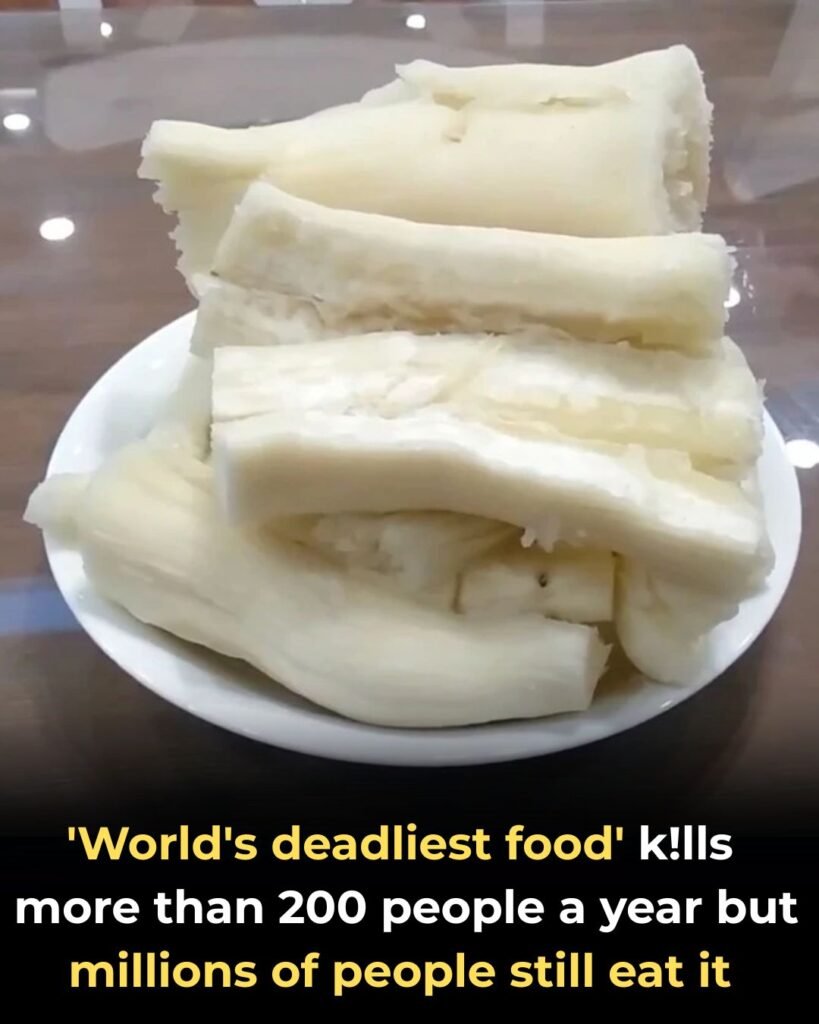
The “World’s Deadliest Food” That Millions Still Eat
Every year, a surprising number of deaths are linked to a food that is also a daily staple for millions of people worldwide. That food is cassava—a root crop consumed by over 500 million people globally.
Despite its importance as a source of energy and nutrition, cassava carries serious risks if not prepared properly.
What Is Cassava?
Cassava is a starchy root vegetable originally from South America and now widely grown across Africa, Asia, and Latin America. It is used to make foods like flour, tapioca, and traditional dishes in many cultures.
While highly valuable as a food source, cassava naturally contains compounds that can become toxic under certain conditions.
Why Can Cassava Be Dangerous?
Cassava contains cyanogenic glucosides, natural compounds that release hydrogen cyanide when the plant is eaten without proper processing.
These compounds act as a natural defense for the plant—but for humans, they can be harmful or even fatal.
According to global health data:
-
Around 200 people die each year from improperly prepared cassava
-
High exposure to cyanide can lead to poisoning and serious health complications
Symptoms of cyanide exposure may include:
-
Headaches and dizziness
-
Nausea and vomiting
-
Difficulty breathing
-
In severe cases, death
A Serious Condition: Konzo
One of the most severe health issues linked to cassava consumption is konzo, a neurological disease.
-
Causes sudden, irreversible paralysis of the legs
-
Often occurs in communities relying heavily on poorly processed cassava
-
More common during famine or food shortages, when proper preparation methods are skipped
Konzo is especially associated with:
-
High cyanide intake
-
Low-protein diets, which reduce the body’s ability to detoxify cyanide
Why Do People Still Eat Cassava?
Despite its risks, cassava remains essential because:
-
It is affordable and widely available
-
Grows well in difficult climates
-
Provides a major source of calories for millions
When prepared correctly, cassava is safe and nutritious, which is why it continues to be a staple food in many regions.
How to Make Cassava Safe to Eat
The key to safe consumption is proper processing, which removes harmful toxins.
Common preparation methods include:
-
Peeling the root thoroughly
-
Soaking it (sometimes for up to 24 hours or more)
-
Fermenting or drying
-
Cooking it completely
These steps significantly reduce cyanide levels and make cassava safe for consumption.
When Risks Increase
The danger of cassava poisoning rises in situations such as:
-
Famine or war, when people skip proper preparation
-
Food shortages, leading to reliance on bitter (high-toxin) varieties
-
Lack of awareness about safe processing methods
For example, in some regions facing food scarcity, people have consumed cassava without adequate preparation, increasing the risk of poisoning.
The Bottom Line
Cassava is both a life-sustaining food and a potential health risk.
It does not deserve fear—but it does require respect and proper handling.
Key Takeaways:
-
Cassava can release toxic cyanide if not prepared correctly
-
Around 200 deaths occur annually due to improper consumption
-
Proper soaking, processing, and cooking make it safe
-
It remains a vital food source for millions worldwide
Final Thought
Cassava is a powerful reminder that not all foods are safe by default. Some require knowledge, care, and tradition to unlock their benefits.
When prepared properly, cassava nourishes millions.
When neglected, it can become dangerous.
Understanding the difference is what makes all the impact.