
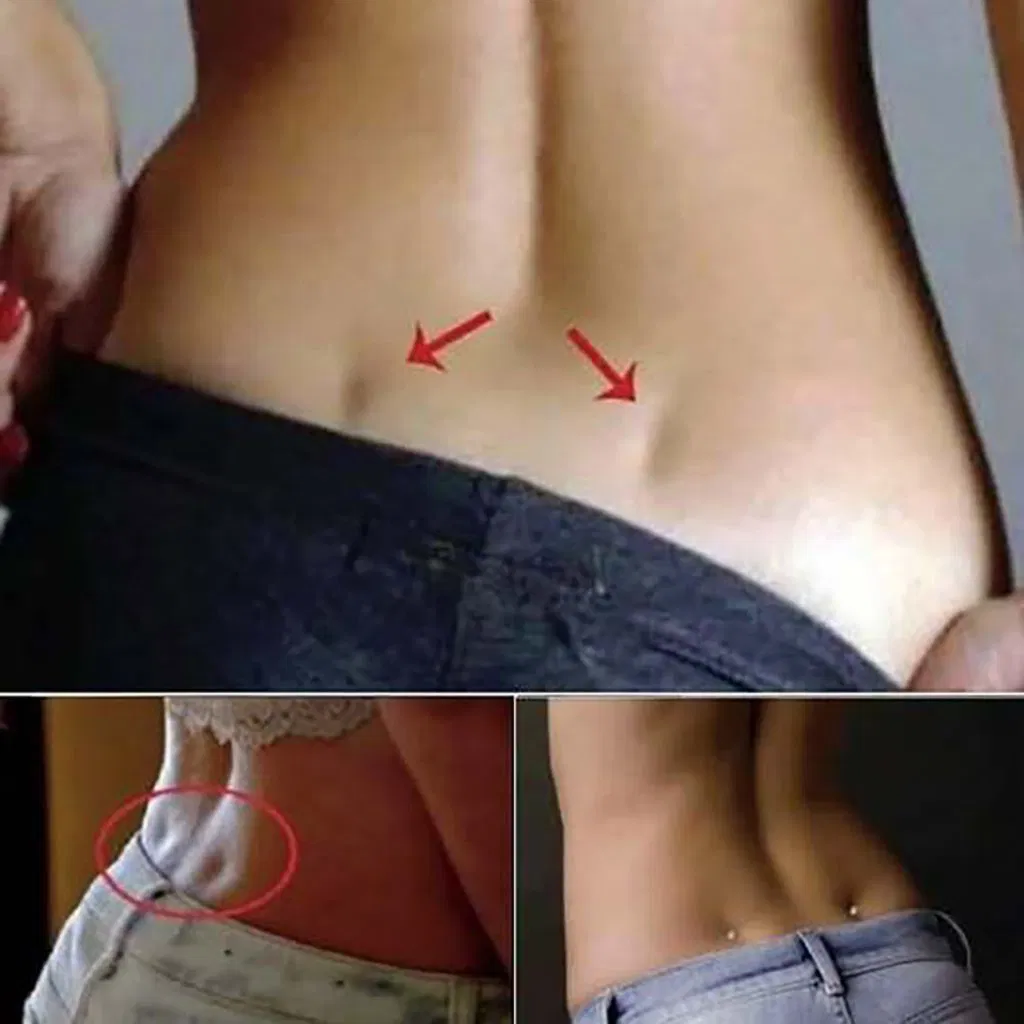
Have you ever noticed those two small, symmetrical hollows just above the hips, resting quietly at the base of the spine? Many people recognize them instantly, others barely pay attention. Yet once someone points them out, curiosity usually follows. What exactly are these so called Venus dimples, and why do they attract so much fascination?
A detail shaped by bone structure

Despite the poetic name, these dimples are simply an anatomical feature. They appear in a specific area of the pelvis known as the posterior superior iliac spine. In some individuals, the ligament connecting skin and bone in this region is slightly shorter or more defined. The result is a pair of natural indentations visible on the surface of the lower back.
Their presence is not linked to lifestyle, fitness routines, or muscle tone. It is the underlying bone structure that determines whether they appear at all.
A trait influenced by genetics
Like eye color or facial shape, Venus dimples are largely inherited. If they run in the family, they are more likely to show up. If the skeletal structure does not naturally allow for them, no amount of exercise will create them.
That said, body composition can influence visibility. When fat levels are lower or muscles more defined, existing dimples may stand out more clearly. Still, this only enhances what is already there.
Not exclusive to women

Although often associated with femininity, men can have them too. In that context, they are sometimes called Apollo’s dimples. The anatomy remains identical. Same location, same cause, same lack of medical significance.
Do they reveal anything about health?
Popular myths occasionally suggest a connection between these dimples and circulation, vitality, or physical performance. Medical science offers a much simpler answer. They are a morphological variation with no proven relationship to overall health.
Having them does not signal superior fitness. Lacking them does not indicate any deficiency.
Why the strong link to beauty?
The name itself hints at history. Venus, the Roman goddess of love and beauty, became associated with aesthetic ideals. Over time, certain physical traits gained symbolic meaning, often shaped by cultural trends rather than biology.
Modern media has amplified this effect. Images celebrating specific body shapes naturally highlight features like these dimples, reinforcing their perceived desirability.
Can they be developed?
Exercise can improve posture, muscle definition, and body contour. It cannot alter bone structure. Training may accentuate dimples that already exist, but it will not generate new ones.
A small reminder about human variation
Ultimately, Venus dimples are neither a beauty requirement nor a health indicator. They are simply one of countless natural variations in human anatomy.
Seen from that perspective, they lose their mystery and gain something more interesting. A quiet example of how bodies differ, without needing deeper meaning or symbolic weight.