
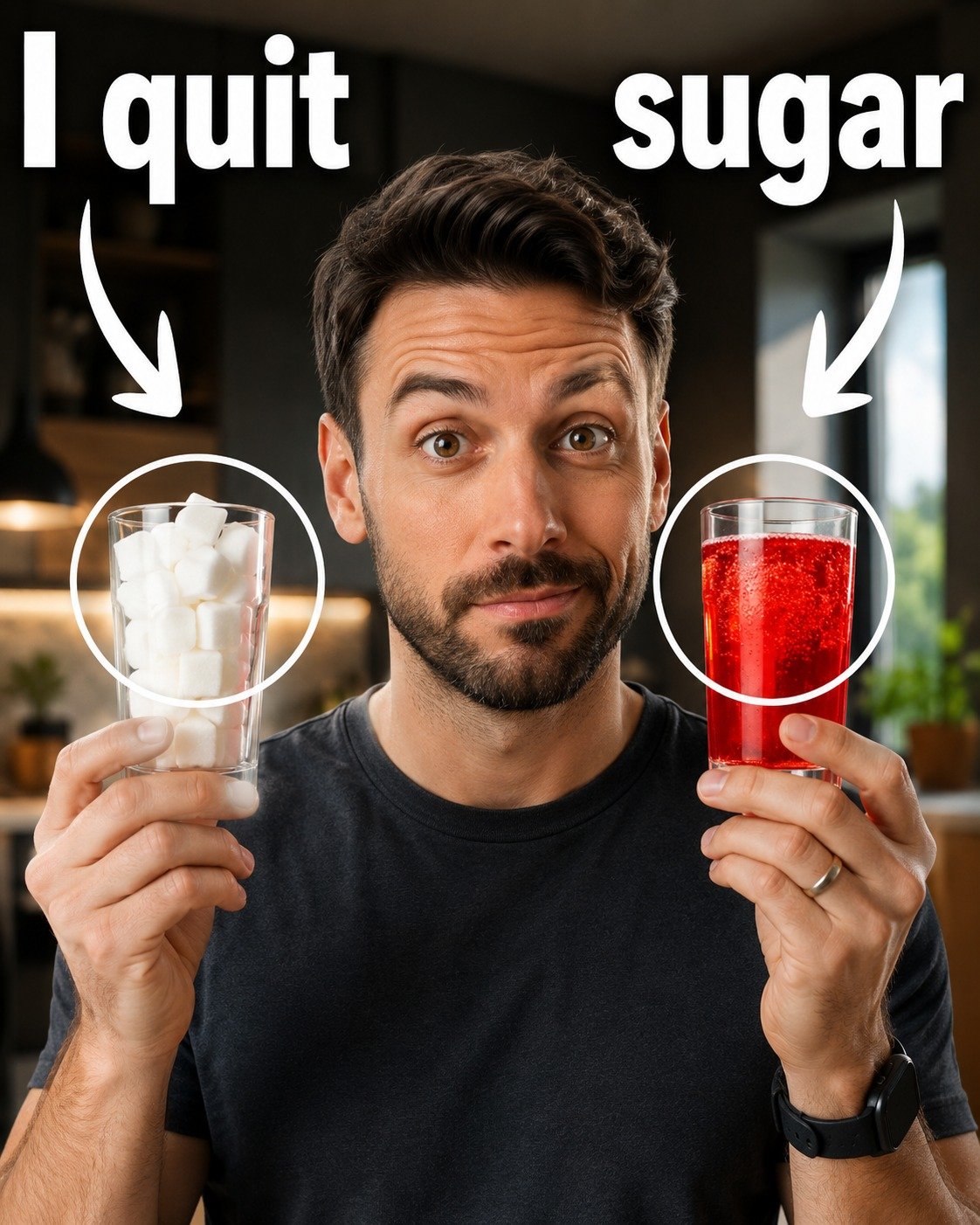
How Sugar Hijacks Your Energy, Cravings, and Fatty Liver
Added sugar is not just sitting in your sweets. It is sneaking into your breakfast bowl, your coffee cup, your salad dressing, your “healthy” snack bar, and then it hits your bloodstream like a fire alarm nobody asked for.
That is why your energy spikes, crashes, and drags itself through the afternoon like a dead battery. That is why you finish eating and still start hunting for something sweet an hour later, as if your mouth has been hijacked by a ghost.
The real problem is not willpower. It is a system that keeps feeding your body fast sugar in hidden forms, then blames you when your cravings get louder, your mood gets rougher, and your waistline starts collecting the fallout.
What looks like a harmless snack can act like a sugar ambush inside your body.
Think of your metabolism like a busy kitchen with one tiny drain. Pour in a flood of liquid sugar, refined carbs, syrup-laced sauces, and sweetened drinks, and the drain cannot keep up. The overflow backs up into your blood, your liver, and your appetite signals.
That is when the roller coaster starts. One minute you are wired, the next you are flat, and by late afternoon you are staring into the fridge like it holds the answer to your life.
And the ugliest part? The sugar industry does not need you to notice. It just needs you to keep calling it “normal.”
The pharmaceutical profit engine runs on complexity, not on something you can see sitting in a grocery aisle for two dollars. That is why the real fix gets buried under noise while the packaged food machine keeps stuffing sweeteners into foods that never tasted sweet in the first place.
The Sugar Surge That Wrecks Your Day
The first thing people notice is the mood swing. Sugar hits fast, and your body answers with a sharp burst of energy that never lasts, like revving a car engine in neutral until the tank is nearly empty.
Then comes the drop. Your brain starts demanding another hit, your hands drift toward snacks, and even simple tasks feel heavier than they should.
Whole fruit does not behave like that. An apple is not a sugar bomb; it is sugar wrapped in fiber, pectin, and protective plant compounds that slow the rush and make your body work for it.
That is the difference between sipping gasoline and eating a meal. One is stripped bare and slams your system; the other arrives in a package your body can actually handle.
So when you swap juice for whole fruit, you are not just “being healthier.” You are stopping the flood at the door.
Over time, that matters because your cravings stop sounding like an emergency siren. Breakfast no longer sets off a sugar roller coaster before lunch, and you stop feeling like you need a rescue snack every few hours.
Why Your Liver Takes the Hit First
Your liver is the sorting hub. When sugar keeps arriving in excess, it starts turning that extra load into fat and storing it like a warehouse that never gets to close.
Picture a furnace filter caked with soot. Air still tries to pass through, but the whole system has to work harder, hotter, and less cleanly. That is what repeated sugar overload does inside your liver.
The first sign is not dramatic. It is the dull heaviness after meals, the stubborn belly fat, the feeling that your body is running on sticky gears instead of smooth ones.
And once you understand that, the “healthy” drink trap looks very different. A juice, a smoothie with syrups, an iced coffee loaded with sweeteners, or an energy drink can deliver a sugar load faster than a dessert because the fiber is gone and the body barely gets a chance to slow down.
Liquid sugar is not a treat. It is a shortcut straight into overload.
That is why switching to water, unsweetened tea, black coffee, or homemade drinks with berries and lemon changes the game. You are not just removing sweetness; you are taking pressure off the organ that has been forced to mop up the mess.
The shift shows up in real life. Mornings feel less like recovery mode. Meals stop leaving you foggy. The constant tug toward something sweet gets quieter, like a radio finally turned down.
Why Cravings Keep Coming Back
Cravings are not a moral failure. They are a message from a body that keeps getting fast fuel without enough protein, fiber, or staying power.
Think of a meal built on sugar and white starch like a paper umbrella in a thunderstorm. It looks like structure for a second, then collapses the moment your blood sugar starts moving.
Protein changes that. Eggs, beans, yogurt, tofu, fish, chicken, lentils, nuts, and seeds slow the whole ride down and keep you full long enough to stop the scavenger hunt.
That is why a breakfast of cereal and jam leaves you prowling for snacks, while a breakfast built around protein and fiber keeps your hands off the vending machine and your brain out of panic mode.
And here is the part most people miss: even “healthy” foods can be sugar traps when the label is doing gymnastics. Granola, bottled dressings, flavored yogurts, snack bars, and sweetened drinks can stack hidden sugar so fast you blow past your limit before lunch.
Start reading labels like your energy depends on it, because it does. Once you cut the hidden stuff, your appetite stops acting like a spoiled child in the back seat.
That is when the payoff gets real. You reach the afternoon without that shaky, desperate feeling. You stop needing sugar to get through the day. Your body starts acting like it remembers how to burn fuel instead of chase it.
The Fastest Way to Break the Cycle
One common kitchen habit can sabotage the whole thing: keeping sweet drinks and sweet snacks within arm’s reach. If it is visible, it becomes automatic.
That is why the smartest move is not “try harder.” It is rearranging the environment so the easiest choice is the one that does not spike your blood sugar.
Buy plain oats instead of sugar-loaded granola. Choose whole fruit instead of juice. Make your own dressing with olive oil, lemon, and herbs. Keep nuts, dark chocolate, and protein-rich foods ready before the craving even shows up.
And if you want the next layer that makes this stick, look at what happens when you pair sugar reduction with the right mineral support for energy control. That is where the whole system starts to settle down.
This article is for informational purposes only and does not replace professional medical advice. Please consult your healthcare provider for personalized guidance.