
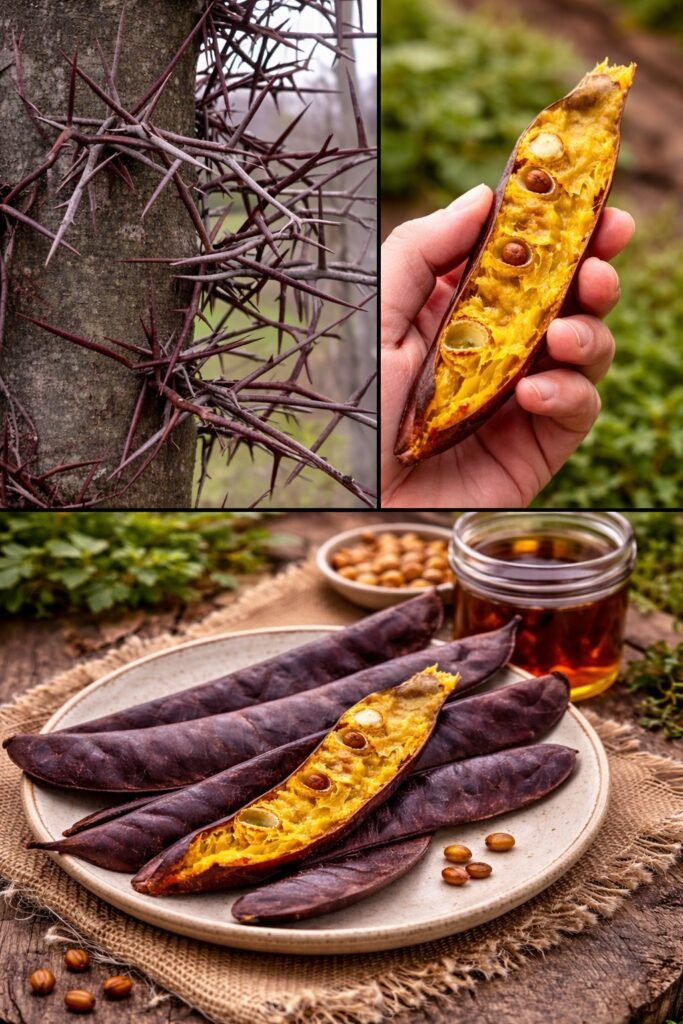
1. What Are Honey Locust Pods?
Honey locust pods are long, flat seed pods that typically grow 20–45 cm (8–18 inches) in length. As they mature, they change color from green to dark reddish-brown and develop a leathery texture.
Inside each pod you will usually find three main components:
- Sweet pulp – the edible, aromatic part of the pod
- Hard seeds – small, shiny seeds embedded in the pulp
- Fibrous material – the structure that holds everything together
The pulp lining the pod contains natural sugars, which give it a flavor often described as a mix of caramel, molasses, dates, and light cocoa.
2. Why Honey Locust Pods Are So Interesting
Many people refer to the “hidden power” of honey locust pods because they offer several practical advantages.
Natural Sweetness
The pulp inside the pod contains naturally occurring sugars, which makes it possible to create natural syrups and flavor infusions without relying heavily on refined sugar.
Strong Flavor Concentration
Even a small amount of honey locust infusion can give foods and drinks a deep, warm sweetness.
Versatile Uses
The pods can be used in several ways:
- Kitchen ingredient (syrups, tea infusions)
- Natural flavoring
- Animal feed in some traditional systems
- Compost or garden material
- Craft or decorative use
3. Understanding the Pod: Pulp vs Seeds
Sweet Pulp
The pulp is the most valuable part of the pod.
Common uses include:
- Infusions
- Syrups
- Flavoring desserts
- Tea-like drinks
Seeds
The seeds are very hard and durable. While some people experiment with roasting or grinding them, they require much more processing and are usually not the focus for beginners.
For most people starting out, it’s easiest to use the pulp through pod infusions.
4. How to Harvest Honey Locust Pods
When to Harvest
The best time to harvest is late summer through fall, when pods are fully mature.
Look for pods that are:
- Dark brown
- Dry or drying
- Sweet-smelling
Avoid pods that are:
- Green or immature
- Moldy
- Sour-smelling
- Waterlogged
Pods are often found on the ground beneath the tree, making them relatively easy to collect.
5. Turning Honey Locust Pods Into Food
Honey Locust Pod Syrup (Popular Method)
This is the easiest and most common way to use the pods.
Basic method
- Break the pods into smaller pieces using kitchen shears.
- Place them in a pot and cover with water.
- Simmer gently to extract the flavor.
- Strain the liquid thoroughly.
- Slowly reduce the liquid until it thickens into syrup.
Ways to use the syrup
- Drizzle over pancakes or waffles
- Add to oatmeal or yogurt
- Stir into tea or coffee
• • Use as a flavor base for desserts

Honey Locust Tea or Infusion
Another simple method is making a mild herbal infusion.
Method
- Break several pods into pieces.
- Add them to hot water.
- Simmer gently for 10–15 minutes.
- Strain and enjoy warm.
The result is a lightly sweet drink with warm caramel-like notes.
Flavor Extract for Baking
The pod infusion can also be reduced and used as a natural flavor enhancer in:
- cakes
- breads
- sauces
- homemade syrups
6. Traditional and Practical Uses
Historically, honey locust pods were sometimes used as:
- A natural sweetener substitute
- Livestock feed supplement
- Fermentation ingredient
- Homestead pantry item
Because pods dry well, they can be stored for long periods and used when needed.
Precautions
- Only harvest pods from correctly identified honey locust trees.
- Avoid pods that show signs of mold, rot, or contamination.
- People with allergies or health conditions should consult a healthcare professional before consuming wild plants.
- Always start with small amounts when trying a new wild food.