
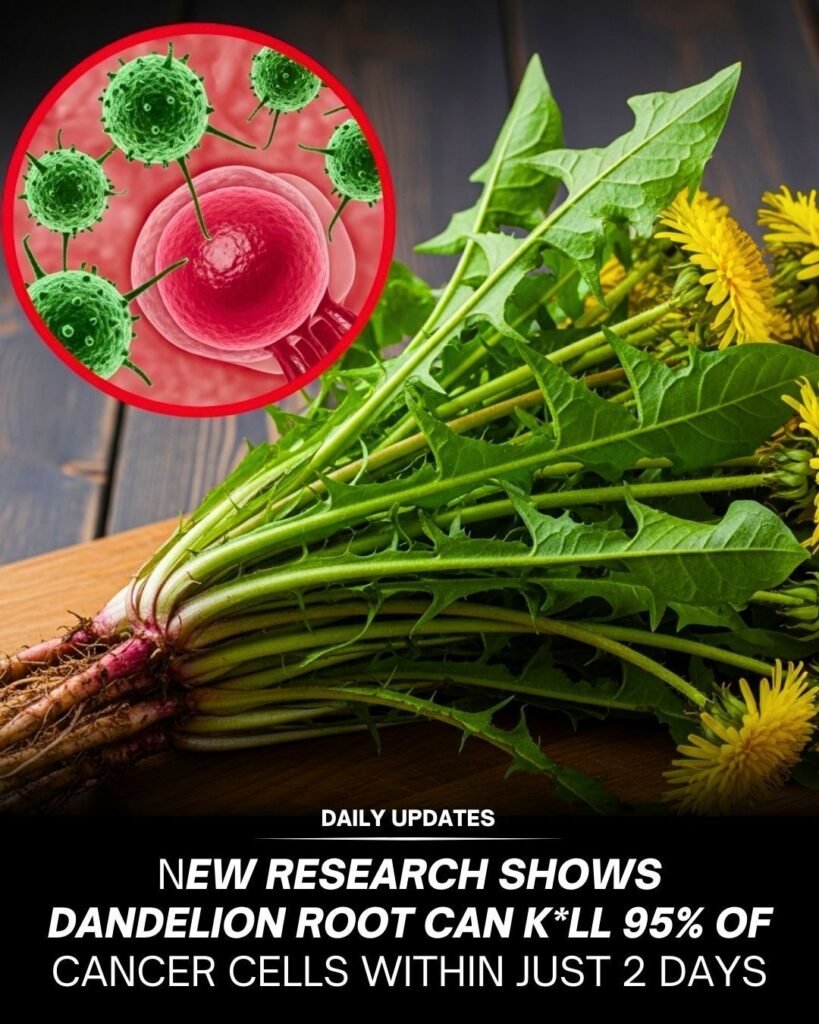
You may have seen headlines claiming that dandelion root can “kill 95% of cancer cells in just 2 days.” These bold statements are eye-catching — but they require important context.
Dandelion root, derived from the common plant Taraxacum officinale, has been studied in laboratory settings for its potential biological effects. While early research is intriguing, it is crucial to separate laboratory findings from proven medical treatments.
This article explores what researchers have discovered so far — and what remains unproven.
What Is Dandelion Root?
Dandelion root has been used traditionally in herbal medicine for centuries, particularly for:
-
Digestive support
-
Liver health
-
Mild diuretic effects
-
General detoxification practices
The root contains bioactive compounds such as:
-
Sesquiterpene lactones
-
Polyphenols
-
Flavonoids
-
Triterpenes
-
Inulin (a type of prebiotic fiber)
These compounds are responsible for much of the scientific interest in dandelion root extract.
Where Did the “Kills Cancer Cells” Claim Come From?
The dramatic claims often stem from laboratory (in vitro) studies. In these experiments, cancer cells are exposed directly to concentrated dandelion root extract in controlled conditions.
Some lab studies have observed:
-
Induction of apoptosis (programmed cell death) in certain cancer cell lines
-
Reduced viability of leukemia, colon cancer, or pancreatic cancer cells in petri dishes
-
Minimal effects on non-cancerous cells in the same controlled environment
However, there’s a critical distinction:
Results in isolated cancer cells in a laboratory do not equal proven treatment in humans.
Cells in a dish behave very differently from cancer inside a living body.
Understanding Apoptosis and Lab Results
Apoptosis is the body’s natural process of eliminating damaged or abnormal cells. Some plant compounds can trigger this process in cancer cells during laboratory testing.
Researchers studying dandelion root extract have suggested that it may:
-
Disrupt mitochondrial function in cancer cells
-
Increase oxidative stress selectively in malignant cells
-
Activate pathways that lead to programmed cell death
But these findings are preliminary and require human clinical trials to determine safety, dosage, and effectiveness.
What About Human Studies?
Limited early-phase human research has been explored, particularly in Canada, where interest in dandelion root extract has led to small pilot investigations.
However:
-
Large-scale randomized controlled trials are lacking
-
There is no approved medical guideline recommending dandelion root as a cancer treatment
-
It is not recognized as a replacement for chemotherapy, radiation, immunotherapy, or surgery
Major cancer organizations emphasize that herbal extracts should never replace evidence-based oncology care.
Why Lab Results Can Be Misleading
Headlines often overlook important factors:
1. Concentration Differences
The doses used in lab studies are highly concentrated extracts — far stronger than what you would get from tea or supplements.
2. Bioavailability
Even if a compound works in a petri dish, it must survive digestion, metabolism, and distribution in the human body to have similar effects.
3. Complexity of Cancer
Cancer is not one disease. It includes hundreds of types with different genetic and biological characteristics.
Potential Supportive Benefits (Not a Cure)
While dandelion root is not a proven cancer treatment, it may offer general health-supporting properties:
-
Antioxidant activity
-
Anti-inflammatory potential
-
Digestive support
-
Prebiotic fiber benefits (due to inulin content)
Supporting overall health can be valuable during conventional treatment — but always under medical supervision.
Safety Considerations
Dandelion root is generally considered safe for many adults when consumed moderately. However, caution is necessary for:
-
Individuals with gallbladder problems
-
People taking diuretics or lithium
-
Those on blood-thinning medications
-
Individuals allergic to plants in the Asteraceae family
Possible side effects include:
-
Digestive upset
-
Increased urination
-
Allergic reactions
Anyone undergoing cancer treatment should consult their oncologist before adding herbal supplements.
The Real Takeaway
The statement that dandelion root can “kill 95% of cancer cells in 2 days” refers to specific laboratory conditions — not confirmed clinical outcomes in patients.
Scientific research into plant-based compounds is ongoing and valuable. Many modern medicines originally came from plants. But translating lab success into safe, effective human treatment takes years of rigorous testing.
At present:
-
Dandelion root is not a cure for cancer.
-
It should not replace medical therapy.
-
Research is still evolving.
Why Responsible Reporting Matters
Cancer patients and their families are often searching for hope. Sensational headlines can create unrealistic expectations or lead people to delay proven treatment.
Hope is important — but it should be grounded in science.
Final Thoughts
Dandelion root is a fascinating plant with promising laboratory research behind it. Scientists continue to study its bioactive compounds to better understand their potential medical applications.
However, until large human trials confirm safety and effectiveness, it remains an experimental subject — not an established cancer therapy.
If you or someone you love is facing cancer, the safest path is evidence-based medical care guided by qualified professionals. Herbal supplements may play a supportive role, but only under proper supervision.
Science moves forward step by step — and responsible interpretation is just as important as discovery.