
(And how to actually protect your lungs)
For years, many people have been told the same thing: “Don’t go out in the cold, or you’ll get pneumonia.”
Sounds logical, right? Cold air, coughing, lung infection — easy connection.
But here’s the truth 👇
Cold weather does NOT directly cause pneumonia.
So what does cause it? And why do pneumonia cases often rise in winter? Let’s break it down — clearly, medically, and without fear-mongering.

What Is Pneumonia, Really?
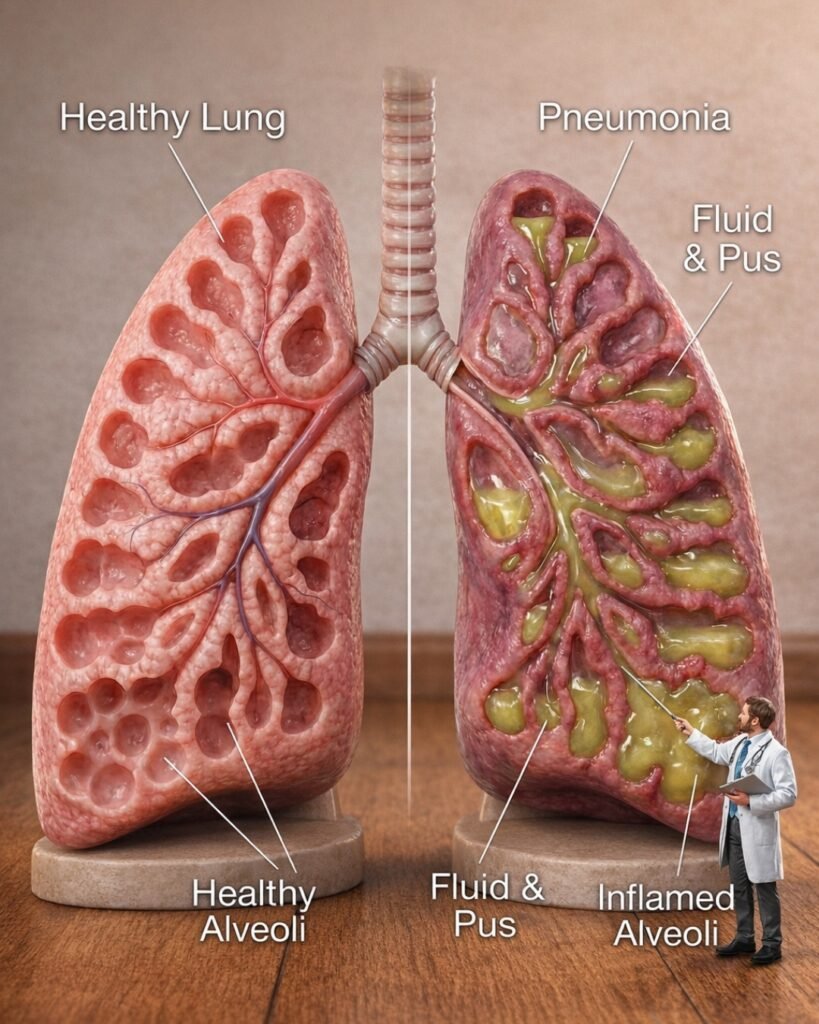
Pneumonia is a serious lung infection that inflames the air sacs (alveoli) in one or both lungs. These air sacs can fill with fluid or pus , making it hard to breathe and oxygenate the blood.
It can affect:
-
Children
-
Healthy adults
-
Elderly people
-
Anyone with weakened immunity
And yes — it can happen any time of year .
❌ The Myth: “Cold Air Causes Pneumonia”
Cold air does not affect your lungs .
Snow, wind, or low temperatures cannot create pneumonia on their own .
You don’t get pneumonia from:
-
Being cold
-
Getting rained on
-
Walking barefoot on cold floors
-
Sleeping with a fan on
Those are old myths that refuse to die.
✅ The Real Causes of Pneumonia
Pneumonia is caused by microorganisms , not temperature.
1. Bacteria (Most Common Cause)
-
Streptococcus pneumoniae is the leading bacterial cause
-
Often follows a cold or flu
-
Can become severe quickly if treated
2. Viruses
-
Influenza (flu)
-
RSV
-
COVID-19
Viral pneumonia can weaken the lungs and sometimes lead to secondary bacterial pneumonia , which is more dangerous.
3. Fungi
-
More common in people with sick immune systems
-
Found in soil or bird droppings in certain regions
4. Aspiration
-
Inhaling food, vomit, saliva, or liquids into the lungs
-
Common in people with swallowing problems, alcohol intoxication, or neurological conditions
So Why Is Pneumonia More Common in Winter?
Great question — and this is where cold weather indirectly plays a role.
🧊 Winter Increases Risk Because:
-
People spend more time indoors (closer contact = easier spread of virtues)
-
Flu and respiratory viruses circulate more
-
Cold, dry air can dry out nasal passages , weakening local defenses
-
Immune systems may be under stress due to lack of sunlight, vitamin D, or poor sleep
➡️ Cold weather doesn’t cause pneumonia — viruses and bacteria do.
Who Is at Higher Risk?
Pneumonia can hit anyone, but risk is higher if you:
-
Are over 65 or under 5
-
Smoke or vape
-
Have asthma, COPD, heart disease, or diabetes
-
Have a weakened immune system
-
Recently had the flu or a bad cold
-
Are you bedridden or hospitalized?
Common Symptoms You Shouldn’t Ignore
Pneumonia doesn’t always start dramatically. Early symptoms can look “normal” — until they aren’t.
watch for:
-
Persistent cough (with yellow, green, or bloody mucus)
-
Fever or Chills
-
Shortness of breath
-
Chest pain when breathing or coughing
-
Fatigue or confusion (especially in older adults)
-
Rapid breathing or heart rate
⚠️ In children and elderly people, symptoms may be subtle but dangerous.
How to Actually Protect Yourself From Pneumonia
Forget the myths. Focus on real prevention .
✅ 1. Vaccination
-
Pneumococcal vaccine
-
Annual flu shot
-
COVID-19 vaccines (where recommended)
Vaccines don’t prevent all pneumonia, but they dramatically reduce severe cases.
✅ 2. Treat Colds and Flu Properly
-
Don’t “power through” serious infections
-
Rest, hydrate, and seek care if symptoms worsen
✅ 3. Strengthen Your Immune System
-
Quality sleep
-
Balanced nutrition
-
managing stress
-
Adequate vitamin D (especially in winter)
✅ 4. Stop Smoking
Smoking damages lung defenses and makes infections harder to fight.
✅ 5. Practice Good Hygiene
-
Wash hands
-
Cover coughs
-
Avoid close contact with sick people when possible
When to See a Doctor Immediately
Get medical help urgently if you or someone else has:
-
Basey Era
-
Blush lips or fingertips
-
High fever that won’t go down
-
Chest pain
-
Confusion or sudden pain
Pneumonia is treatable — early treatment saves lives .
Final Takeaway
Let’s be clear:
❌ Cold weather does NOT cause pneumonia
✅ Bacteria, viruses, fungi, and aspiration do
Winter increases risk , not because of cold air — but because of virtues, indoor exposure, and weakened defenses .
Understanding this changes how you protect your health:
-
Less fear of cold
-
More focus on immunity, prevention, and early care
Your lungs don’t need superstition.
They need science, awareness, and smart protection 🫁
Treatment please