
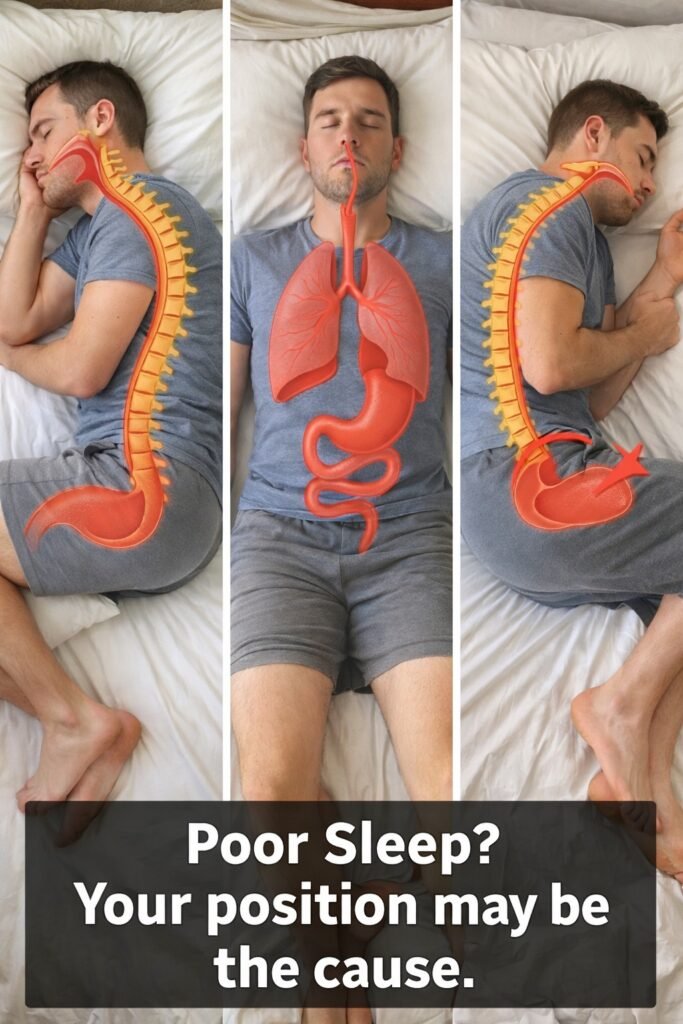
Waking up tired, achy, or unrested even after a full night in bed is incredibly frustrating. Many people overlook a key factor: the way they position their body during sleep can contribute to discomfort in the back, neck, or even digestive issues like occasional heartburn. Studies and experts from places like Johns Hopkins Medicine and the Sleep Foundation note that sleep posture influences spinal alignment, breathing, and overall comfort. The good news? Small adjustments to how you lie down, often with the right pillow support, can help promote better alignment and more restful nights. But there’s one surprising detail about side sleeping that many people miss – keep reading to discover it.

Why Sleep Position Matters More Than You Think
Your body spends about a third of each day in one or more sleep positions. Poor alignment during those hours can add strain to muscles and joints, potentially leading to morning stiffness or interrupted rest. Research shows that certain postures support neutral spine positioning better than others, which may help reduce pressure on key areas.
But that’s not all. Factors like snoring, breathing ease, and even how gravity affects digestion can shift based on how you lie. Understanding the pros and cons of common positions empowers you to experiment safely.

The Pros and Cons of Common Sleeping Positions
Back Sleeping (Supine Position)
- Pros — This position keeps your head, neck, and spine in a more neutral alignment for many people. It can help distribute weight evenly and may ease pressure on the lower back when supported properly. Some sources note it can reduce acid reflux symptoms compared to other positions by keeping the head elevated slightly.
- Cons — It may worsen snoring or breathing pauses for some, as the tongue can fall back. For those with neck discomfort, it might increase strain without the right pillow.
Side Sleeping (Lateral Position)
This is the most popular position, adopted by over 60% of adults according to sleep research.
- Pros — Side sleeping often supports better spinal alignment when knees are slightly bent. It can help keep airways open, potentially reducing snoring. Left-side sleeping is frequently recommended for easing occasional heartburn, as it positions the stomach below the esophagus.
- Cons — Without proper pillow support, it can lead to shoulder or hip pressure over time. Right-side sleeping may not offer the same digestive benefits for some.
Stomach Sleeping (Prone Position)
- Pros — For a small group, it might feel comfortable and could help keep airways open in certain cases.
- Cons — Most experts agree this position tends to twist the neck and strain the lower back due to the arched spine. It often leads to more morning discomfort.
Here’s a quick comparison:
- Back: Good for neutral alignment; may help with lower back ease but can increase snoring.
- Side: Supports spine when adjusted; great for breathing and occasional reflux relief.
- Stomach: Least recommended for most due to neck and back strain.

How to Optimize Your Sleep Position – Actionable Tips
The key is finding what works for your body while maintaining spinal neutrality. Here’s how to make simple, effective changes tonight:
- If you prefer back sleeping:
- Place a small pillow or rolled towel under your knees to support the natural curve of your lower back.
- Use a medium-firm pillow that fills the space under your neck without tilting your head forward.
- Keep arms at your sides to avoid shoulder strain.
- If side sleeping feels best:
- Bend your knees slightly and place a pillow between them to align hips and reduce lower back twist.
- Choose a thicker pillow to keep your head level with your spine – ear should line up with shoulder.
- For occasional heartburn, try the left side first and consider a body pillow for extra support.
- If you wake up in stomach position:
- Transition gradually by starting on your side or back.
- Use a thin pillow (or none) under your head and place one under your pelvis to minimize arching.
But here’s the interesting part: many people switch positions multiple times nightly without realizing it. A consistent routine, like using supportive bedding, helps minimize disruptive shifts.
Pillow and Mattress Tips for Better Alignment
Your setup plays a huge role. A pillow that’s too high or too flat throws off neck alignment. Mattresses that are too soft or firm can exaggerate pressure points.
- Experiment with pillow height: Aim for neutral – no upward or downward tilt.
- Consider a body pillow: It hugs your body and prevents rolling into awkward angles.
- Research suggests supportive surfaces promote better rest quality overall.
Common Questions About Sleep Positions (FAQ)
What’s the best sleeping position if I have occasional back discomfort?
Many find side sleeping with a pillow between the knees or back sleeping with one under the knees helps maintain better alignment and reduce morning stiffness.
Does sleeping on my left side really help with heartburn?
Yes, evidence from health sources indicates left-side sleeping can position the stomach to minimize acid flow upward for some people experiencing reflux symptoms.
Can changing my sleep position improve snoring?
Side sleeping often keeps airways more open compared to back sleeping, which may reduce snoring for many – though individual results vary.
Wrapping It Up: Start Small for Better Nights
Your sleep position isn’t a one-size-fits-all fix, but understanding how it impacts comfort lets you make informed tweaks. Start with one adjustment – like adding a knee pillow – and note how you feel after a few nights. Better alignment often leads to waking up more refreshed and less achy.
Disclaimer: This article is for informational purposes only and not intended as medical advice. Sleep preferences and needs vary greatly. If discomfort persists or affects your daily life, consult a healthcare professional for personalized guidance.