
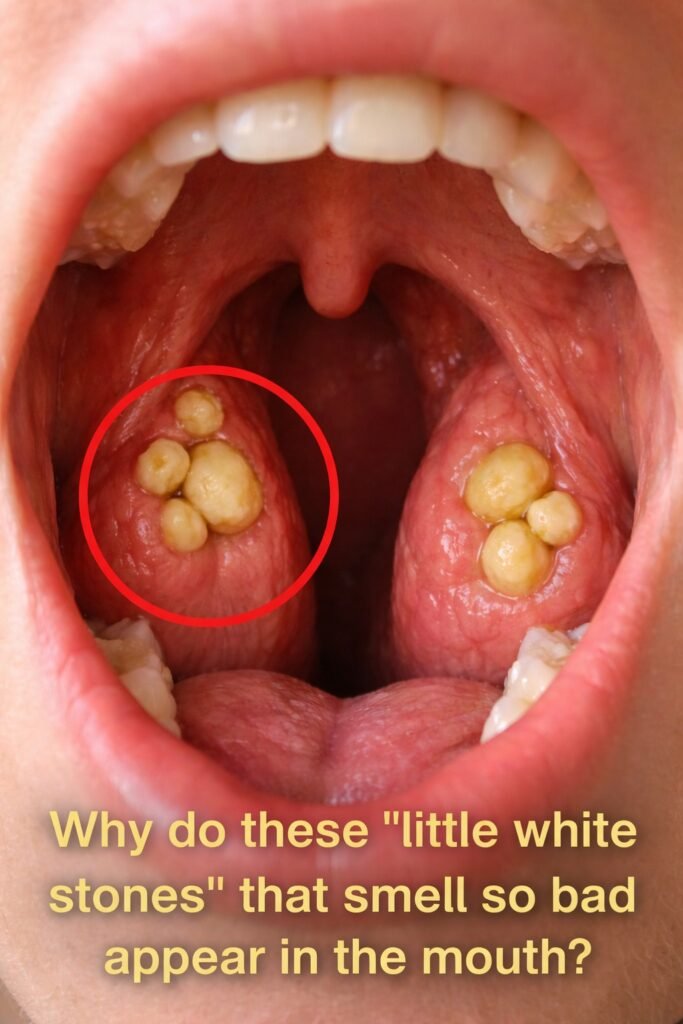
Have you ever noticed small, whitish or yellowish lumps stuck in the back of your throat, only to discover they release a really unpleasant, rotten smell when dislodged? These little formations often lead to persistent bad breath that brushing alone can’t fix, leaving you feeling self-conscious during conversations or close moments. The foul odor comes from trapped bacteria breaking down debris, creating sulfur compounds that make your breath noticeably off-putting. But here’s the good news: understanding what’s really going on can help you manage them better—and there’s a simple daily habit that many people overlook which makes a big difference in keeping them at bay.

What Exactly Are These “Little White Stones”?
These small, hard lumps are commonly known as tonsil stones, or tonsilloliths in medical terms. They form in the natural crevices (called crypts) of your tonsils, which are the soft tissue pads at the back of your throat that help fight infections.
Tonsil stones develop when bits of food, dead cells, mucus, and bacteria get caught in those pockets. Over time, the mixture hardens due to calcium deposits, turning into small, pebble-like masses that can be white, yellow, or even slightly gray. They’re usually tiny—about the size of a grain of rice or a small pea—but larger ones can feel more noticeable.
Research shows that up to 10% of people experience them at some point, with higher chances in teens and young adults due to active tonsil tissue.
But that’s not all… the real issue isn’t just their appearance—it’s how they trap odor-causing bacteria.
Why Do They Smell So Bad?
The strong, foul smell is one of the most common complaints. When bacteria break down the trapped material in the stones, they produce volatile sulfur compounds—the same stuff that gives rotten eggs their stench. This leads to chronic bad breath (halitosis) that lingers even after you brush or use mouthwash.
Studies indicate that these sulfur-producing bacteria thrive in the low-oxygen environment of tonsil crypts, explaining why the odor can be so persistent and hard to mask.
If you’ve ever coughed up one and noticed the immediate whiff, that’s exactly why—it’s concentrated bacterial waste.

Common Signs You Might Have Tonsil Stones
Not everyone notices symptoms right away, but here are the most frequent ones:
- Persistent bad breath that doesn’t improve with regular oral care
- A feeling like something is stuck in your throat
- Mild sore throat or irritation
- Occasional ear pain (referred from the throat)
- Visible white or yellow spots on your tonsils when you open wide and shine a light
- A bad taste in your mouth, especially after dislodging one
Many people only discover them accidentally while checking their throat or coughing.
What Causes Tonsil Stones to Form?
Several factors make some people more prone to developing these:
- Deep or enlarged tonsil crypts (naturally occurring pockets)
- Frequent tonsil infections or chronic inflammation
- Poor oral hygiene allowing more bacteria buildup
- Dry mouth from dehydration or mouth breathing
- Post-nasal drip adding extra mucus to trap debris
Anyone can get them, but they’re more common if you’ve had repeated throat issues.
Safe Ways to Manage and Reduce Tonsil Stones at Home
The good news? Many cases improve with simple, gentle habits. Here’s how to get started:
- Gargle with warm salt water — Mix 1 teaspoon of salt in a cup of warm water. Gargle vigorously for 30 seconds, several times a day. This helps loosen debris and reduce bacteria.
- Stay hydrated — Drink plenty of water throughout the day to keep saliva flowing and prevent dry mouth.
- Use a gentle oral irrigator — On a low-pressure setting, aim a water flosser at your tonsils to flush out pockets (be careful not to use high pressure).
- Brush and floss regularly — Don’t forget your tongue—use a scraper to remove bacteria from the surface.
- Try alcohol-free mouthwash — Rinse after meals to cut down on food particles.
These steps often help smaller stones dislodge naturally or prevent new ones from forming.
Here’s a quick comparison of common approaches:
| Method | How It Helps | Ease of Use | Frequency Recommended |
|---|---|---|---|
| Salt water gargle | Loosens debris, reduces bacteria | Very easy | 3–4 times daily |
| Water flosser (low) | Flushes crypts gently | Moderate | 1–2 times daily |
| Tongue scraping | Removes bacteria from tongue | Easy | Daily |
| Hydration | Prevents dry mouth buildup | Simple | All day |
But wait—there’s more to long-term prevention…

Simple Daily Habits to Help Prevent Them From Coming Back
Consistency is key. Incorporate these into your routine:
- Brush twice a day and floss once to minimize bacteria.
- Use an antibacterial mouthwash (alcohol-free to avoid drying your mouth).
- Avoid dairy if it increases mucus for you (some people notice a difference).
- Chew sugar-free gum to boost saliva production.
- See your dentist or doctor regularly for check-ups.
If stones keep returning despite these efforts, a healthcare professional can offer personalized guidance.
When to See a Professional
Most tonsil stones are harmless and manageable at home. However, reach out to a doctor or ENT specialist if you experience:
- Ongoing pain or swelling
- Difficulty swallowing
- Frequent infections
- Very large or persistent stones
They can check for underlying issues and discuss options if needed.
Final Thoughts
Those little white stones might seem mysterious and embarrassing, but they’re a common issue tied to how your tonsils naturally trap debris. By understanding their causes and adopting gentle daily habits like consistent gargling and hydration, many people see a big reduction in both the stones and the bad breath they cause. Start with one or two changes today—you might be surprised how quickly things improve.
Frequently Asked Questions
What causes the bad smell from tonsil stones?
The odor comes from bacteria breaking down trapped food and cells, producing sulfur compounds similar to those in rotten foods.
Can tonsil stones go away on their own?
Yes, smaller ones often dislodge naturally through swallowing, coughing, or gargling—no intervention needed.
Are tonsil stones dangerous?
They’re usually harmless and not a sign of serious disease, though they can be uncomfortable and affect breath.
Disclaimer: This article is for informational purposes only and not a substitute for professional medical advice. If you have concerns about your health, please consult a qualified healthcare provider.