
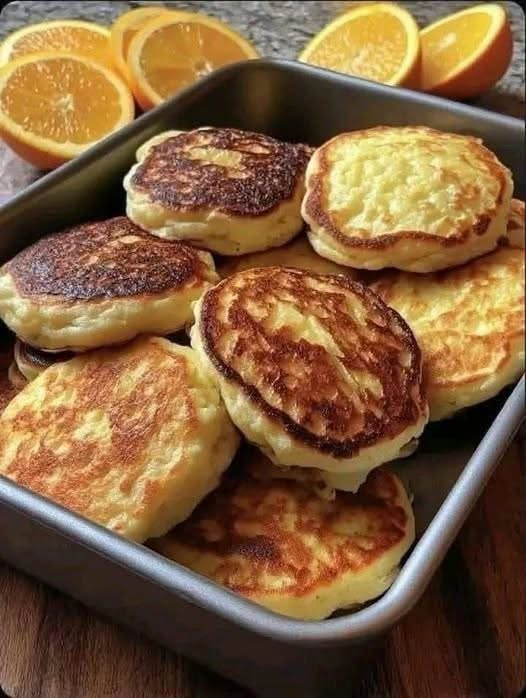
orange ricotta pancakes
Serve them warm for breakfast or brunch with orange slices, a spoonful of yogurt, or a light drizzle of honey. Their gentle sweetness also makes them enjoyable with just a dusting of powdered sugar.
Ingredients for orange ricotta pancakes
- 1 cup (250 g) whole-milk ricotta cheese, drained if watery
- 2 large eggs, separated
- ⅓ cup (80 ml) whole milk, plus a little extra if needed
- 2 tablespoons fresh orange juice
- 1 tablespoon finely grated orange zest
- 2 tablespoons granulated sugar
- 1 teaspoon vanilla extract
- 1 cup (125 g) all-purpose flour
- 1½ teaspoons baking powder
- ¼ teaspoon salt
- 1 tablespoon unsalted butter, melted and slightly cooled
- 1–2 tablespoons neutral oil or additional butter, for cooking
Optional serving ingredients:
- Fresh orange segments
- Plain Greek yogurt
- Honey or maple syrup
- Powdered sugar
- Chopped pistachios or sliced almonds
Instructions for orange ricotta pancakes
Step 1: Prepare the ricotta and orange
If the ricotta has visible liquid around it, place it in a fine-mesh strainer for 10–15 minutes while you prepare the other ingredients. It should be creamy and moist without being watery.
Wash and dry the orange, then grate only the colored outer peel. Avoid the white pith underneath, which can taste bitter. Squeeze enough juice to measure two tablespoons.
Step 2: Combine the dry ingredients
In a medium bowl, whisk together the flour, baking powder, and salt.
Breaking up any small lumps now makes it easier to combine the batter later without excessive stirring. Set the bowl aside while you prepare the wet mixture.
Step 3: Mix the wet ingredients
In a large bowl, whisk the egg yolks with the sugar, milk, orange juice, orange zest, vanilla, and melted butter.
Add the ricotta and stir until evenly distributed. Small ricotta curds are welcome; they help create the tender, slightly textured centers visible in the photograph. You do not need to beat the mixture completely smooth.
Step 4: Beat the egg whites
Using a clean whisk or electric mixer, beat the egg whites in a separate clean bowl until soft peaks form.
When you lift the whisk, the peaks should gently bend at the tips. Avoid beating them until dry or stiff, as that makes them harder to incorporate into the thick batter.
Step 5: Finish the batter
Add the dry ingredients to the ricotta mixture. Stir gently with a spatula just until the flour disappears.
Fold in about one-third of the beaten egg whites to loosen the mixture. Add the remaining whites and fold gently until no large white streaks remain.
The batter should be thick and scoopable, slowly dropping from a spoon. If it is unusually stiff because your ricotta is very dry, fold in an additional tablespoon of milk.
Step 6: Heat the pan
Heat a large nonstick skillet or griddle over medium-low heat. Add a thin coating of oil or butter.
The pan should be hot enough for the batter to sizzle gently. If butter immediately darkens or smokes, lower the heat and let the pan cool slightly before cooking.
Step 7: Cook the first side
Scoop approximately ¼ cup of batter per pancake into the skillet. Gently spread each portion into a small round about 3–3½ inches wide.
Leave space between the pancakes so you can turn them easily. Cook for about 3–4 minutes, until the undersides are golden and the edges begin to look set. This thick batter may produce fewer surface bubbles than ordinary pancake batter.
Step 8: Flip and finish
Slide a thin spatula completely underneath each pancake and turn carefully. Cook for another 2–3 minutes, adjusting the heat as needed.
The pancakes should feel lightly springy, with set centers and no wet batter inside. Check one from the first batch by cutting it open. If the outside browns before the center cooks, reduce the heat for the remaining batches.
Step 9: Serve warm
Transfer the cooked pancakes to a plate or wire rack. Repeat with the remaining batter, adding a little more oil or butter when necessary.
Serve immediately with fresh oranges and your preferred toppings. For the presentation shown in the photograph, arrange the pancakes slightly overlapping in a shallow metal tray just before serving.