
Apple Cider Vinegar & Oral Hygiene: What It Can and Can’t Do
Apple Cider Vinegar & Oral Hygiene: What It Can and Can’t Do
Introduction
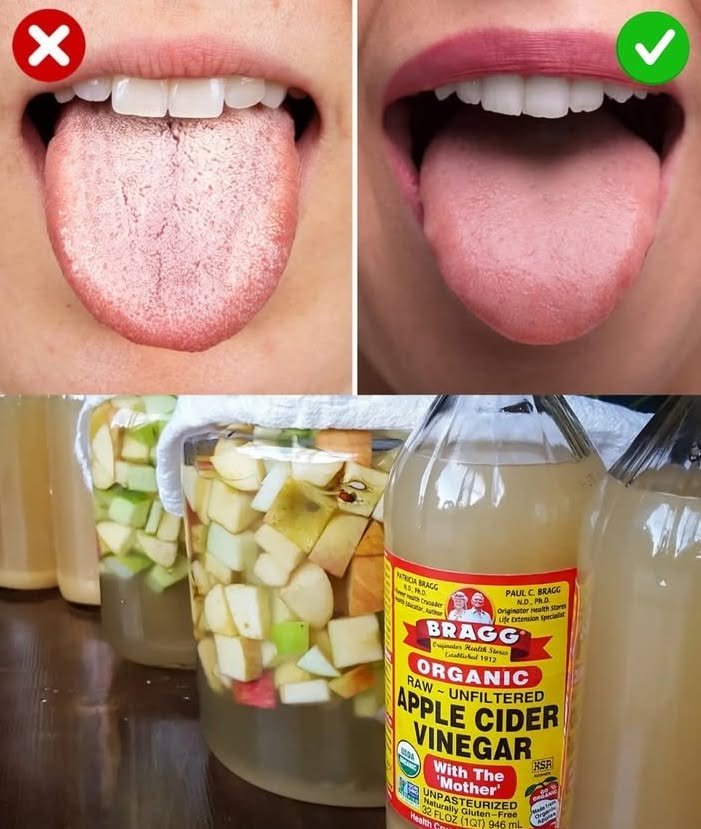
A viral social media image compares a white-coated tongue with a healthy pink tongue and features bottles of Bragg Organic Apple Cider Vinegar (ACV) alongside jars of fermenting apples. The caption claims that apple cider vinegar can make “candida and fungi die overnight.” While apple cider vinegar is a popular kitchen ingredient, these claims are not supported by medical evidence. A white coating on the tongue can have many different causes, and proper diagnosis is important before starting any treatment.
What’s in the Picture?
The viral image combines several elements to promote the idea of a quick home remedy.
Tongue Photos: The image compares a white-coated tongue with a healthy pink tongue. However, a white coating alone does not confirm oral thrush (candida). It may also result from dehydration, poor oral hygiene, smoking, certain foods, medications, or other medical conditions.
Apple Cider Vinegar “With the Mother”: This is fermented apple juice commonly used in cooking, salad dressings, and marinades. The “mother” contains naturally occurring bacteria and yeast produced during fermentation.
Fermenting Apples: These jars illustrate the vinegar-making process but do not provide evidence that the final product can treat fungal infections.
Can Apple Cider Vinegar Kill Candida Overnight?
The short answer is no.
Candida is a fungal infection that requires proper diagnosis by a healthcare professional. When oral thrush develops, treatment usually involves prescription or over-the-counter antifungal medications recommended by a doctor or dentist.
Apple cider vinegar is acidic and may temporarily change the environment inside the mouth, but there is no reliable clinical evidence showing that it can eliminate candida or other fungal infections overnight. Using vinegar instead of proven medical treatment may delay proper care and allow the infection to worsen.
What Is Apple Cider Vinegar Actually Used For?
Apple cider vinegar is best known as a culinary ingredient rather than a medical treatment.
It is commonly used for:
- Salad dressings and vinaigrettes.
- Marinades for meat and vegetables.
- Pickling foods.
- Adding flavor to beverages when properly diluted.
If consumed, it should always be diluted. Drinking or swishing undiluted vinegar may irritate the mouth and throat while gradually wearing away tooth enamel because of its high acidity.
Healthy Habits for a Healthy Tongue and Mouth
If you notice a white coating, persistent bad breath, or discomfort, focus on evidence-based oral hygiene practices.
Helpful habits include:
- Brush your teeth twice daily and gently clean your tongue with a tongue scraper or toothbrush.
- Drink enough water to stay well hydrated.
- Limit excessive sugar and alcohol, which can affect the balance of bacteria and yeast in the mouth.
- Visit your dentist regularly for professional cleanings and oral health evaluations.
- See a doctor or dentist if the white coating persists, becomes painful, bleeds, or is accompanied by difficulty swallowing or other symptoms.
Only a qualified healthcare professional can diagnose oral thrush or other oral conditions accurately.
Safe Ways to Use Apple Cider Vinegar
If you enjoy apple cider vinegar as part of your diet:
- Dilute about 1 teaspoon in a full glass of water and drink it with meals if appropriate for you.
- Avoid using undiluted vinegar as a mouth rinse or treatment for tongue coating.
- Rinse your mouth with plain water afterward to help reduce acid exposure to your teeth.
Conclusion
Apple cider vinegar is a versatile kitchen ingredient, but it does not kill candida or remove a white tongue coating overnight. Good oral hygiene, proper hydration, regular dental care, and timely medical evaluation remain the most effective ways to maintain a healthy mouth. If you notice persistent changes in your tongue or experience ongoing oral discomfort, seek professional advice rather than relying on viral home remedies.
Medical Disclaimer: This article is for educational purposes only. It does not diagnose, treat, cure, or prevent any infection, including candida or other fungal conditions. If you have a white tongue, mouth pain, difficulty swallowing, or other concerning symptoms, consult a licensed dentist or healthcare provider. Do not delay appropriate medical care in favor of home remedies.