
Putting Leaves on Your Eyes for Vision? What Seniors Should Know Today
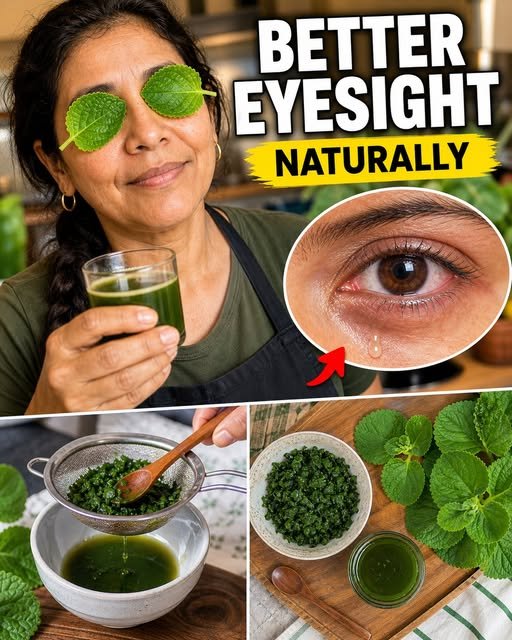
Placing mint-like leaves directly on your eyes is a viral habit many people are trying for better vision.
Below, you’ll see what those leaves actually do, the real risks they carry, and what truly supports your eyesight after 50.
You’ll also learn a simple daily routine that quietly protects your vision over time.
Have you ever felt your eyesight getting weaker and wished for something simple to fix it?
Why These “Eye Leaf” Remedies Are Everywhere Right Now
You’ve probably seen it.
Green leaves placed gently over closed eyes.
Or a bright green juice claiming to “restore vision.”
It looks harmless. Even relaxing.
And that’s exactly why it spreads so fast.
These posts tap into something real:
the frustration of needing stronger glasses,
the annoyance of blurry phone screens,
the quiet worry that your vision is slipping.
When something promises relief without cost, effort, or appointments… it’s hard to ignore.
But there’s a difference between what looks soothing… and what actually helps.
What Actually Changes in Your Eyes After 50
Your eyes don’t suddenly “fail.”
They shift.
Over time, the lens inside your eye becomes less flexible.
Focusing up close gets harder.
Light doesn’t pass through as cleanly as it once did.
That’s why reading menus gets tricky.
That’s why night driving feels different.
This isn’t damage from something you did wrong.
It’s part of aging.
But here’s the quiet problem…
When people try quick fixes like leaf remedies,
they often delay doing the one thing that actually helps:
checking what’s really changing.
The Hidden Risk of Putting Leaves on Your Eyes
This is where most people get surprised.
Leaves may be natural…
but your eyes are not built to handle raw, unfiltered substances.
Even a clean-looking leaf can carry:
- Tiny bacteria you can’t see
- Natural plant compounds that irritate the eye
- Residues from air or handling
And your eyes?
They’re extremely sensitive.
That means even small exposure can lead to:
- Burning or itching
- Redness or swelling
- Mild infections that worsen over time
Your eyes don’t need “natural” — they need “safe.”
And those are not always the same thing.
A Quick Reality Check Most Posts Skip
Here’s something rarely explained clearly:
There is no reliable evidence that placing leaves directly on your eyes improves vision.
That doesn’t mean the idea came from nowhere.
Plants do contain beneficial compounds.
But how you use them matters.
Applying them directly to the eye?
That’s where the problem starts.
What About Green Juices for Vision?
Now this is where things shift.
Drinking green juices is a completely different story.
Vegetables like spinach, carrots, and squash contain nutrients such as:
- Vitamin A
- Vitamin C
- Antioxidants
These support overall eye health.
They help your body maintain the structures your vision depends on.
But here’s the key:
They support.
They don’t replace.
No juice will fix blurred vision overnight.
No drink replaces proper lenses or eye exams.
Still, compared to leaf-on-eye methods?
This is a far safer direction.
A Simple “Do This Instead” Routine (Start Today)
If you want something practical, skip the trends and try this:
Daily Eye Support Checklist:
- Wear the correct prescription lenses
- Take a 20-second break every 20 minutes on screens
- Eat at least one orange or dark green vegetable daily
- Use sunglasses in strong sunlight
- Keep your eyes clean — no DIY substances
That’s it.
Simple.
And it works better than anything viral.
The One Habit That Quietly Protects Your Vision
Here’s the part most people overlook.
Consistency beats intensity.
Not the strongest remedy.
Not the newest trick.
Just steady, repeated care.
Small daily habits protect your vision more than any “miracle” method ever will.
This is the quiet shift happening right now:
Thousands of older adults are moving away from quick fixes…
and returning to simple routines that actually hold up over time.
The Mistake That Costs People Their Sight (Without Realizing It)
It’s not just trying leaf remedies.
It’s waiting too long to check changes.
Vision issues often build slowly.
And by the time they feel serious, they’ve been developing for years.
A basic eye check once a year can catch:
- Early lens changes
- Pressure buildup
- Signs of deeper issues
That one appointment can do more than months of guessing.
Why This Matters More Than Just “Seeing Clearly”
Your vision isn’t just about reading or driving.
It’s about independence.
It’s about recognizing faces.
Moving confidently.
Living without hesitation.
When your vision feels stable, your whole day feels easier.
And that’s the real goal.
Not perfection.
Not reversing time.
But staying capable, comfortable, and in control.
A Quiet Shift Worth Making
Viral remedies will always come and go.
Some will sound convincing.
Some will look harmless.
But your eyes?
They don’t need experiments.
They need care that respects how sensitive they are.
Remember this:
Avoid putting anything untested into your eyes.
Support your body with real nutrition.
Check your vision regularly.
That’s how you protect what matters.
Top 3 takeaways: avoid direct eye remedies, support vision through nutrition, and stay consistent with eye care.
You don’t need something extreme.
You need something reliable.
If this helped you see things differently, share it with someone who’s been thinking about trying one of these remedies.
P.S. Remember the green juice idea? It works best when paired with a small amount of healthy fat — like a few drops of olive oil — because it helps your body absorb those eye-supporting nutrients more effectively.
This article is for informational purposes only and does not replace professional medical advice. Please consult your healthcare provider for personalized guidance.