
Have you ever caught your reflection mid-smile and wondered when your teeth lost their brightness?

Do you angle your face away in photos or hesitate before laughing openly?
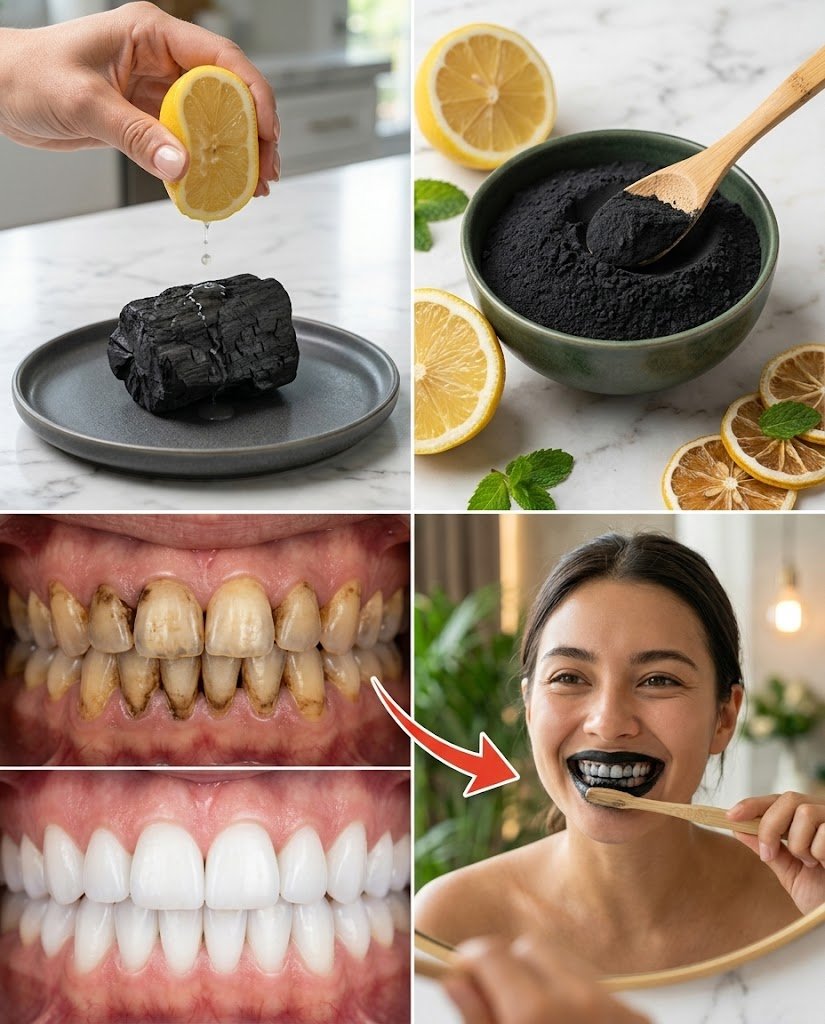
Maybe you’ve watched viral videos showing jet-black charcoal paste transforming dull teeth into dazzling white in minutes.
Or you’ve seen someone rub lemon on their teeth, promising a “natural glow” without chemicals.
It looks simple. It looks affordable. It looks convincing.
But what if that quick fix is quietly damaging the very enamel you’re trying to improve? Stay with me, because what you’re about to learn could protect your smile for years.
Why So Many Adults Chase Whiter Teeth

Teeth naturally darken over time. Coffee, tea, red wine, and even healthy foods like berries leave microscopic stains.
Surveys often suggest that 60–80% of American adults wish their teeth were whiter. That’s not vanity — it’s confidence.
You may be thinking, “I brush every day. Why aren’t they brighter?” Regular brushing removes plaque, but it doesn’t always lift embedded stains.
Frustration builds. Store shelves overflow with options. Social media pushes DIY trends. And somewhere between skepticism and hope, many people try charcoal and lemon.
But here’s the part rarely explained.
The Viral Appeal of Charcoal and Lemon

Activated charcoal is marketed as a magnet for toxins and stains. Lemon juice feels fresh, clean, and powerful.
When mixed, they create a gritty, tangy paste. Brush with it, rinse, and at first glance, teeth may appear brighter.
Is it really whitening? Or is something else happening?
You might notice a squeaky-clean texture. A temporary brightness. A dramatic contrast effect.
But initial impressions can be misleading.
Let’s look deeper.
The Hidden Cost of Stained Teeth — and Rushed Fixes
Stained teeth don’t just affect aesthetics.
They influence first impressions. They shape how confidently you speak. They even affect how often you smile in professional settings.
Imagine preparing for a presentation and worrying more about your smile than your slides. That quiet distraction adds up.
Now imagine making the problem worse with an unproven remedy.
That’s where understanding enamel becomes essential.
What Science Suggests About Charcoal

Charcoal is abrasive. That grit helps scrub away surface stains.
But here’s the catch: enamel does not regenerate.
Some laboratory studies suggest charcoal can remove minor surface discoloration. However, it also roughens enamel.
Rough enamel traps more stain particles over time.
You may see short-term brightness, followed by deeper discoloration later. That cycle can lead to disappointment — and sometimes sensitivity.
And there’s more.
No charcoal whitening product currently carries the Seal of Acceptance from the American Dental Association.
That absence doesn’t automatically mean danger. But it does mean evidence is limited.
And limited evidence calls for caution.
The Real Risk of Lemon Juice
Lemon juice has a pH between 2 and 3. That’s highly acidic.
Acid softens enamel. Even brief exposure can weaken its structure.
When enamel thins, the yellowish dentin beneath becomes more visible. Ironically, teeth can appear more yellow over time.
Now combine acid-softened enamel with abrasive charcoal.
You’re essentially sanding down a protective layer that cannot grow back.
Initial brightness might not be whitening at all — it could be enamel loss.
That’s not a trade most people would knowingly make.
Two Real-Life Lessons
Emily, 39, tried charcoal-lemon paste after seeing dramatic before-and-after photos online. The first week, she felt excited.
By week three, iced water triggered sharp discomfort.
Her dentist noted early enamel wear. The “brightness” she saw came from polished enamel edges, not true stain removal.
Then there’s Daniel, 47, who used charcoal alone nightly for a month.
He noticed his teeth felt rough. Coffee stains seemed darker than before.
Professional cleaning restored smoothness, but his dentist advised stopping the DIY approach immediately.
These stories are becoming more common.
But here’s the hopeful part.
There are safer, evidence-based options that actually work.
What Actually Works: 8 Smarter Ways to Whiten
Let’s count down the safer path.
8. Professional Cleaning First
Before whitening anything, remove plaque and tartar.
A dental cleaning can significantly brighten teeth by eliminating buildup that traps stains.
Sometimes what you think is deep discoloration is surface accumulation.
That alone can shift your smile noticeably.
7. ADA-Accepted Whitening Toothpaste
These toothpastes use gentle polishing agents and controlled peroxide levels.
They gradually lift surface stains without aggressively eroding enamel.
Results may be subtle but consistent.
Patience matters here.
6. Over-the-Counter Peroxide Strips
Hydrogen peroxide or carbamide peroxide penetrates enamel to break apart stain molecules.
Used as directed, these can produce visible changes in weeks.
Temporary sensitivity is possible, but typically manageable.
Consistency — not excess — drives success.
5. Dentist-Supervised Whitening
In-office treatments use higher peroxide concentrations under professional monitoring.
Results can be dramatic and fast.
Importantly, gums and enamel are protected during the process.
Safety and effectiveness align here.
4. Daily Fluoride Use
Fluoride strengthens enamel, making it more resistant to acid and staining.
Strong enamel reflects light better, which enhances brightness naturally.
Protection precedes beauty.
3. Smart Drinking Habits
Use a straw for dark beverages.
Rinse with water after coffee or wine.
Wait 30 minutes before brushing after acidic drinks.
Small habits prevent cumulative staining.
2. Diet Choices That Gently Polish
Crunchy fruits and vegetables like apples and carrots can help mechanically clean surfaces.
They don’t bleach teeth, but they reduce buildup.
It’s a subtle assist — and every assist counts.
1. Protecting Enamel at All Costs
This is the foundation.
Once enamel thins, whitening becomes harder and sensitivity increases.
Preserving enamel means long-term brightness potential.
And that’s the real transformation.
DIY vs. Proven Methods Comparison
| Method | Whitening Effect | Enamel Safety | Long-Term Outlook | Professional Backing |
|---|---|---|---|---|
| Charcoal + Lemon | Low, temporary | High risk | Sensitivity, erosion | None |
| Charcoal Alone | Minor surface | Moderate abrasion | Rough enamel | Limited evidence |
| Lemon Alone | Minimal | Very high acid risk | Rapid enamel loss | Not recommended |
| ADA Whitening Toothpaste | Moderate gradual | Safe with use | Sustainable | Yes |
| Professional Whitening | High | Supervised safe | Strong results | Recommended |
When placed side by side, the difference becomes clear.
A Safe Whitening Timeline
| Timeframe | Action | What to Expect |
|---|---|---|
| Weeks 1–2 | Switch to ADA toothpaste | Slight brightness |
| Weeks 3–4 | Add peroxide strips | Noticeable shade lift |
| Month 2+ | Maintain habits | Stable results |
| As needed | Professional consult | Customized plan |
Notice something? There’s no instant miracle.
But there is a safe progression.
You Might Be Wondering…
“Is natural always bad?”
Not at all.
Baking soda in controlled toothpaste formulas can polish gently.
Hydrogen peroxide occurs naturally in small amounts in the body.
The issue isn’t “natural vs. chemical.” It’s evidence vs. assumption.
And evidence favors controlled whitening agents over acidic scrubs.
Picture This Instead
Imagine 30 days from now.
You smile without calculating angles.
You sip iced water without flinching.
You know your enamel is intact.
Confidence feels different when it’s backed by smart choices.
That’s not flashy. But it’s powerful.
The Bottom Line
Charcoal and lemon may look appealing, but they carry real risks.
Whitening works best when enamel is protected, not stripped.
Professional guidance, ADA-accepted products, and patient consistency outperform viral shortcuts.
Before trying a trend, ask yourself: Is this protecting my smile — or gambling with it?
Start today with one small change. Swap risky DIY for a proven method.
Your future self — smiling confidently in photos — will thank you.
Share this with someone considering charcoal or lemon. Sometimes protecting a smile begins with sharing the truth.
This article is for informational purposes only and does not replace professional dental advice. Consult your dentist for personalized guidance before starting any whitening method.