
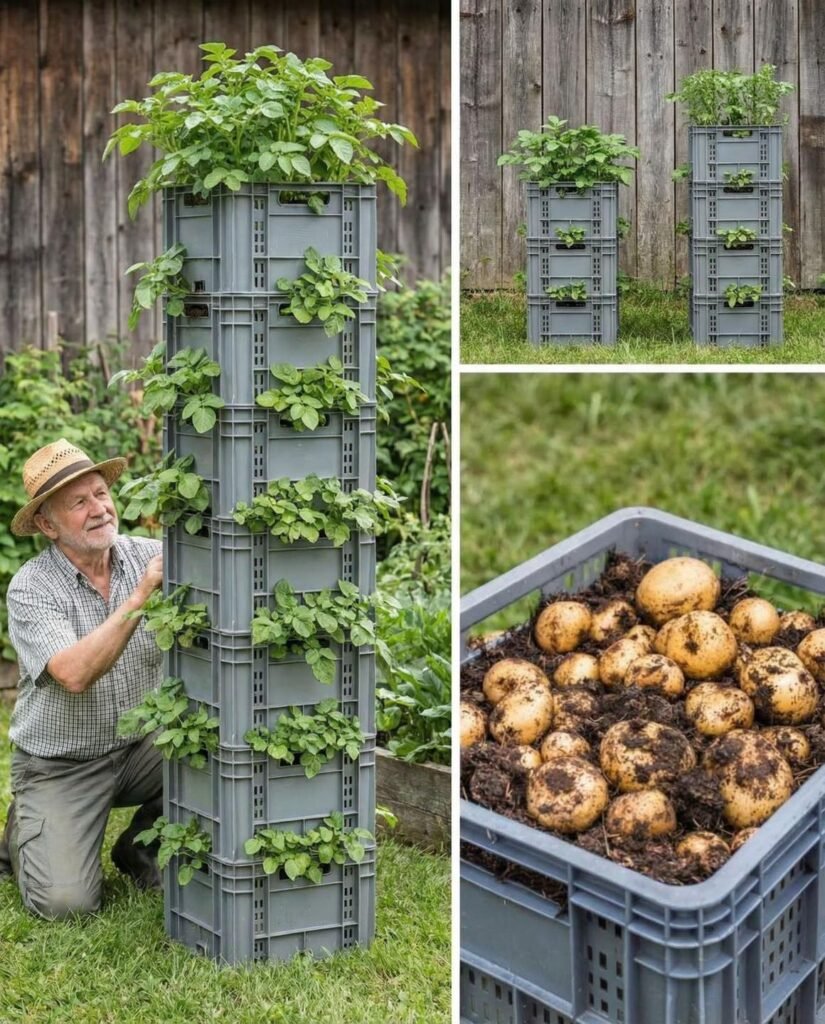
If you think you need a large garden to grow a serious potato harvest, think again.
This simple vertical method uses stackable plastic crates to turn a small backyard corner into a high-yield potato tower. It’s clean, efficient, easy to manage — and surprisingly productive.
Here’s how to do it step by step.
🌿 Why Grow Potatoes in Crates?
Growing potatoes in stacked crates offers several advantages:
- Perfect for small spaces – ideal for compact backyards or urban gardens
- Better airflow & drainage – prevents rot and waterlogging
- Easy harvesting – no digging required
- Controlled soil quality – fewer disease issues
- Modular system – expand or reduce height as needed
It’s essentially vertical farming — but simple and DIY.
🧰 What You’ll Need
- 3–5 sturdy plastic crates (stackable, ventilated sides)
- Quality potting mix or garden soil mixed with compost
- Seed potatoes (certified disease-free)
- Straw or mulch (optional)
- Watering can or drip irrigation
🥔 Step 1 – Prepare the Seed Potatoes
Choose healthy seed potatoes.
If they’re large, cut them into pieces — each piece should have at least 1–2 “eyes” (sprouting points).
Let the cut pieces dry for 24–48 hours before planting. This helps prevent rot.
🌱 Step 2 – Start the First Layer
- Place one crate on level ground.
- Add about 10–15 cm (4–6 inches) of soil.
- Place the seed potatoes evenly spaced.
- Cover with another 10 cm of soil.
Water lightly.
⬆️ Step 3 – Stack as the Plants Grow
When the green shoots reach about 15–20 cm (6–8 inches) tall:
- Add another crate on top.
- Fill around the stems with soil, leaving the top leaves exposed.
- Repeat the process each time the plant grows taller.
This mimics the traditional “hilling” method but vertically.
Each buried stem section produces more potatoes.
💧 Watering & Care
- Keep soil consistently moist (not soaked).
- Potatoes prefer full sun (6–8 hours daily).
- Add compost or organic fertilizer every few weeks.
- Good drainage is essential — crates naturally help with this.
🌼 When to Harvest
After flowering, potatoes begin forming underground.
When the plant foliage starts to yellow and die back, it’s harvest time.
Instead of digging, simply:
- Unstack the crates one by one
- Gently remove soil layer by layer
- Collect clean, beautiful potatoes
It’s almost like opening a treasure chest.
🌾 Why This Method Works So Well
Potatoes naturally produce tubers along buried stems.
By stacking crates and continuously adding soil, you increase the productive area vertically — without expanding your footprint.
More buried stem = more potatoes.
📏 How Tall Should You Go?
3–5 crates is ideal for stability.
If going taller:
- Make sure crates lock securely
- Consider anchoring in windy areas
🌍 Perfect For:
- Small backyards
- Raised bed gardens
- Rental properties
- Urban growers
- Anyone who wants a tidy, modular system
Final Thoughts
Growing potatoes doesn’t require a farm — just a smart setup.
This vertical crate tower turns a simple corner of your garden into a high-yield food source. It’s efficient, satisfying, and surprisingly easy to manage.
And when harvest day comes, instead of digging in the dirt… you simply lift, layer by layer, and watch the reward appear. 🥔✨
If you’re looking for a practical, space-saving garden project — this one is worth trying.