
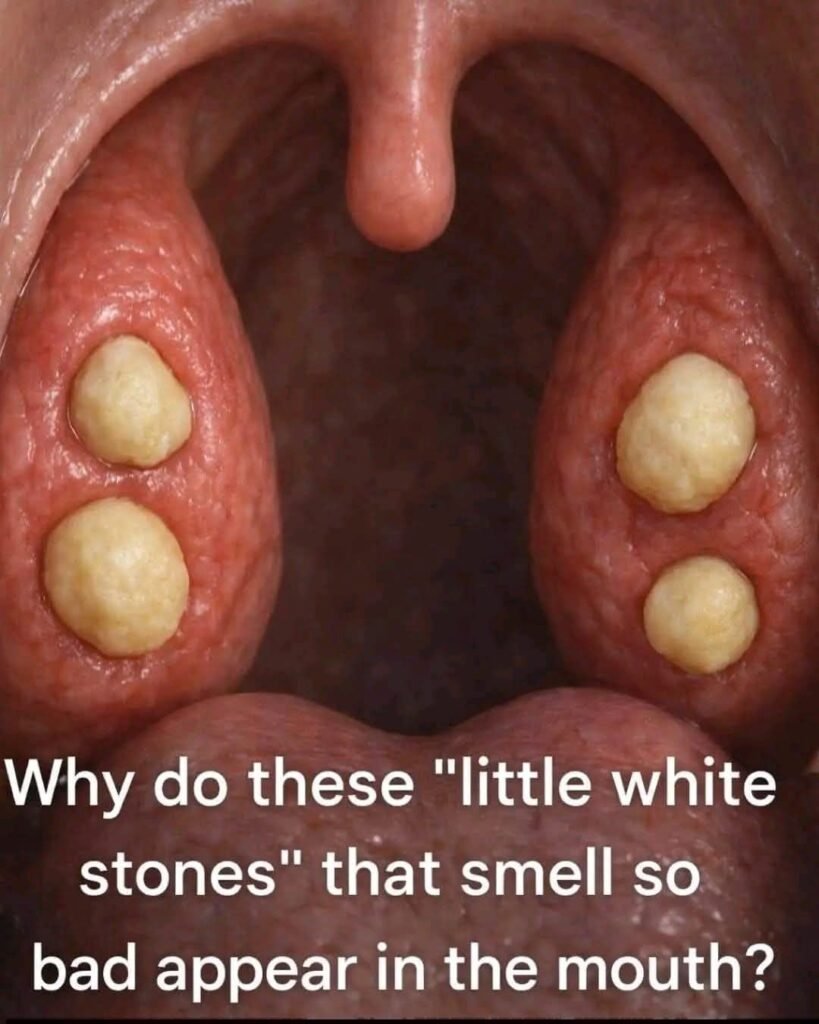
😮 Tiny White Lumps From Your Throat? Here’s What Tonsil Stones Really Are — and Why They Smell So Bad
Have you ever coughed up a small, hard white lump from the back of your throat — only to notice an extremely unpleasant odor? Many people have this surprising experience, which can quickly lead to worries about bad breath or oral health.
It can feel embarrassing, especially if persistent odor affects your confidence during conversations or social interactions. The reassuring news is that these little “stones” are actually quite common — and in most cases, they’re harmless and manageable once you understand what’s happening.
Let’s take a closer look at what they are and why they occur.
🦷 What Exactly Are These Small White “Stones”?
These tiny white lumps are called tonsil stones, or tonsilloliths in medical terms.
They form in the tonsil crypts — small natural crevices found in your tonsils, which are the oval-shaped tissues located at the back of your throat. Your tonsils help your immune system by trapping germs and particles that enter through your mouth or nose.
Tonsil stones usually begin as soft debris, including:
-
Food particles
-
Dead cells
-
Mucus
-
Bacteria
When this material gets trapped in the tonsil crypts, it can gradually harden or calcify, forming small pebble-like stones. They may be as tiny as a grain of rice or grow larger over time.
Some people are more prone to developing tonsil stones because they have deeper or more irregular tonsil crypts, making it easier for debris to accumulate. Medical sources such as the Cleveland Clinic note that tonsil stones are generally harmless but can become a recurring annoyance for some individuals.
😷 Why Do Tonsil Stones Smell So Bad?
The strong odor associated with tonsil stones is caused by anaerobic bacteria — bacteria that thrive in low-oxygen environments inside the stones.
As these bacteria break down trapped debris, they release volatile sulfur compounds (VSCs). These sulfur gases are the same substances responsible for many cases of chronic bad breath.
People often describe the smell as:
-
Sulfur-like
-
Cheesy
-
Rotten or putrid
Even with good brushing and flossing habits, bad breath can persist if tonsil stones remain hidden in the tonsils. That’s why some people notice lingering odor despite maintaining excellent oral hygiene.
👃 Common Causes of Bad Breath vs. Tonsil Stone Odor
| Cause | Typical Source | Key Signs |
|---|---|---|
| Poor oral hygiene | Teeth, gums, tongue | Improves with brushing/flossing |
| Dry mouth | Reduced saliva | Sticky mouth, worse in mornings |
| Gum disease | Infected gums | Bleeding, swelling, bad taste |
| Digestive issues | Stomach or reflux | Sour taste, heartburn |
| Tonsil stones | Tonsil crypts | White lumps, foul smell, throat irritation |
⚠️ When Tonsil Stones May Cause Symptoms
Many tonsil stones cause no noticeable problems, but some people may experience:
-
Persistent bad breath
-
Feeling something stuck in the throat
-
Mild throat irritation
-
Difficulty swallowing
-
Ear discomfort (referred pain)
-
Visible white or yellow lumps in the tonsils
✅ Safe Ways to Help Manage Tonsil Stones
Tonsil stones are usually harmless, but good oral hygiene and throat care can help reduce buildup:
-
Brush teeth and tongue twice daily
-
Gargle with warm salt water
-
Stay well hydrated
-
Use alcohol-free mouthwash
-
Avoid smoking and excessive alcohol
-
Maintain regular dental checkups
Some people find that gently gargling after meals helps prevent debris from settling into tonsil crypts.
⚠️ Avoid aggressively poking or forcing stones out, as this can cause irritation or infection.
🚨 When to See a Doctor or Dentist
Seek medical advice if you experience:
-
Severe pain
-
Difficulty swallowing or breathing
-
Persistent swelling
-
Fever
-
Repeated infections
-
Large or frequently recurring stones
In rare cases, chronic tonsil stone issues may require professional treatment.
🌟 The Bottom Line
Tonsil stones may be unpleasant — especially because of their strong odor — but they are common and usually harmless. Understanding what causes them can help reduce anxiety and make it easier to manage symptoms effectively.
If you notice ongoing bad breath that doesn’t improve with brushing and flossing, tonsil stones could be a hidden factor. With proper oral hygiene and medical guidance when needed, most people can keep them under control and feel more confident in everyday life.